Jackson Custom Shop PC1
READY FOR A DIFFERENT KIND OF PC1?
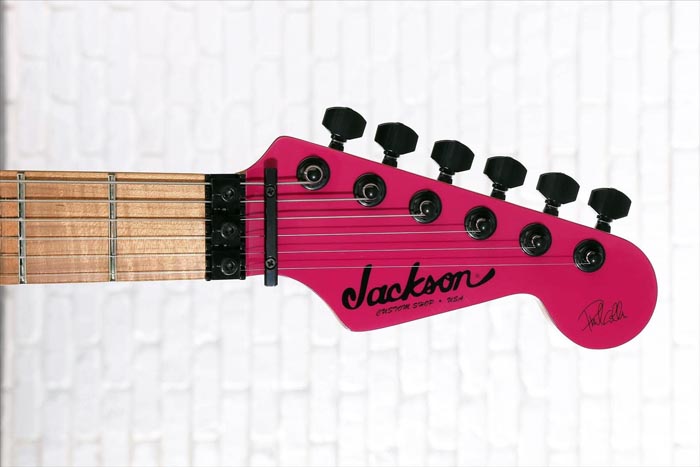
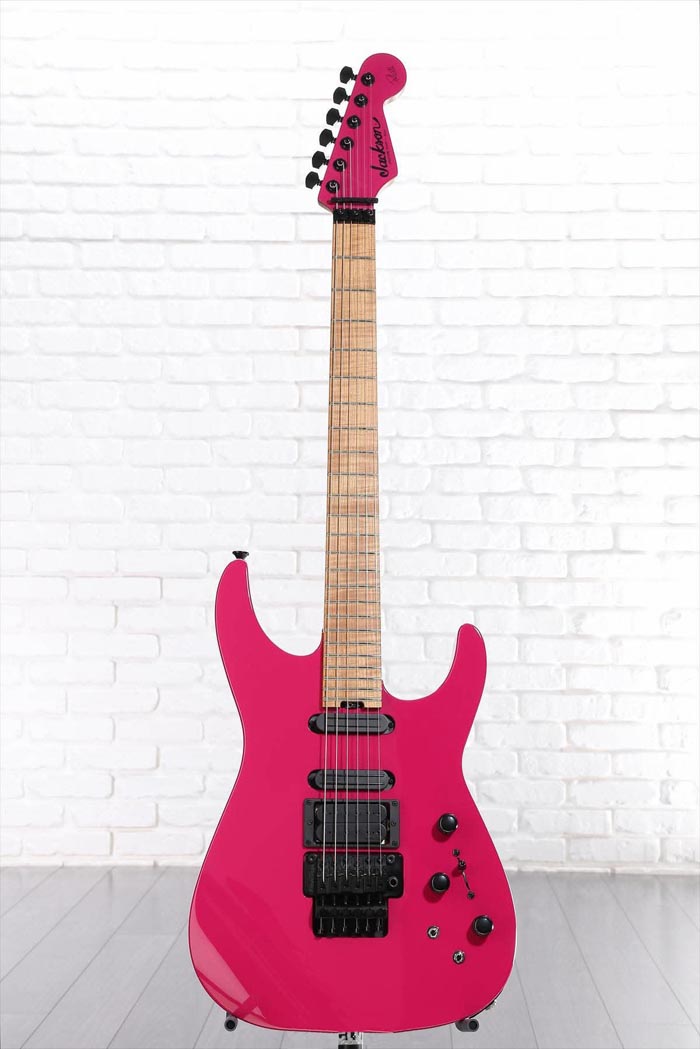
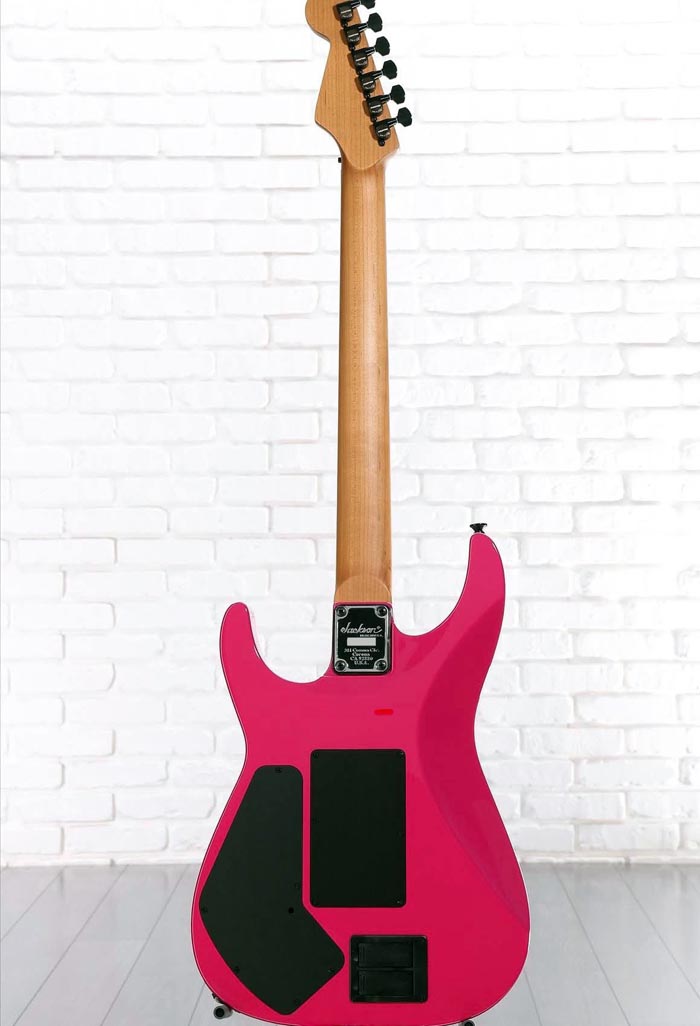
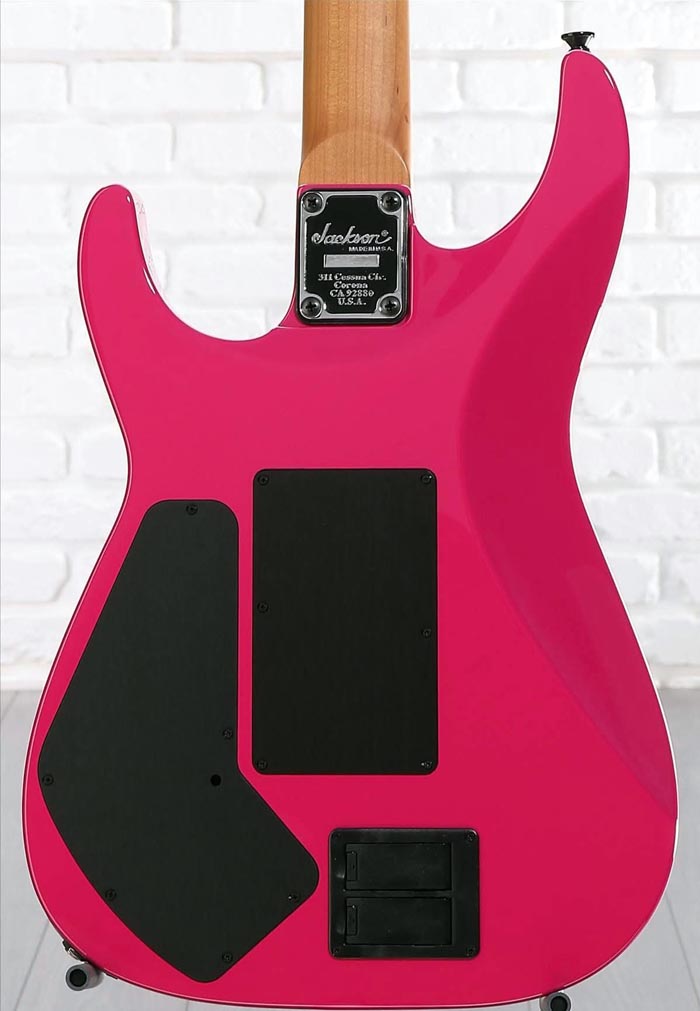
The Jackson Custom Shop PC1 takes the familiar Phil Collen signature in a different direction. Instead of the traditional mahogany body and figured maple top, this Sweetwater-spec’d instrument features roasted alder and a solid Galaxy Fuchsia finish. It also pairs a caramelized flame maple neck and fingerboard with an Original Floyd Rose, a DiMarzio pickup selection, and Jackson’s Sustainer system.
I’ve owned several PC1 guitars, so I know the model and its usual recipe. The Galaxy Fuchsia finish first catches your attention, but the different bodywood and pickup choices make this more than a cosmetic variation. It’s an opportunity to see how some changes to a familiar design affect the overall instrument.
BACKGROUND
A PINK GUITAR WITH A STORY
Mrs. Darth told me this past spring that I needed a pink guitar. Less than two weeks later, this Jackson Custom Shop PC1 became available. I wasn’t entirely sure what to expect from the Galaxy Fuchsia finish, but I figured it was worth a look.
The first example I purchased arrived with cracks on both sides of the neck mounting joint. That’s not something I consider normal, and it isn’t something I’ve experienced with my other Jackson guitars. I own four PC1 models, and this was the first time I’d encountered anything like it. I had to return a guitar I hadn’t even had the chance to play.
That was a tough pill to swallow. This was a Custom Shop order, and the next opportunity to get another one was potentially two years away. Fortunately, another brand-new example became available toward the end of summer. I was able to get another one without waiting for a Custom Shop build timeline.
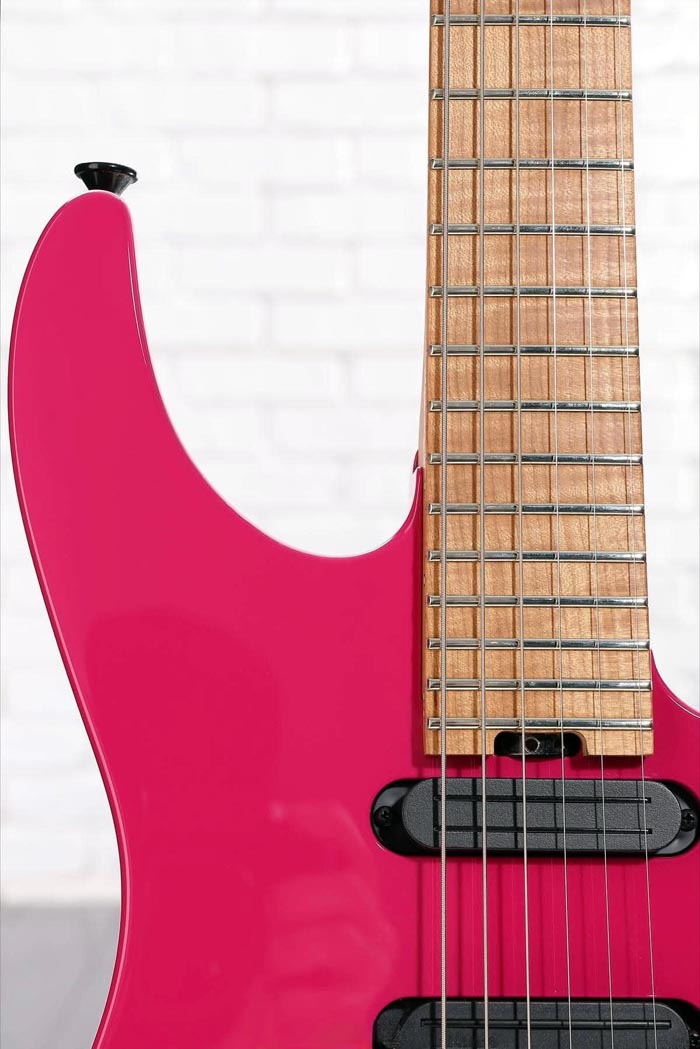
Opening the case was worth the wait. Galaxy Fuchsia has a presence that’s difficult to capture in photographs. The finish looks striking in person, and the solid color gives this PC1 a very different appearance from the transparent finishes normally associated with the model’s figured maple tops.
OUT OF THE BOX
The guitar arrived in excellent playing condition. The frets were even and level, and the action felt right at the nut and all the way up the neck. I was told that Sweetwater specifically hadn’t made any setup adjustments, which makes the condition it arrived in even more impressive.
I’ve received plenty of guitars that needed attention before they felt right. This wasn’t one of them. The fretwork and setup were among the better examples I’ve encountered straight out of the case.
EVALUATING THE JACKSON CUSTOM SHOP PC1
BODY AND CONSTRUCTION
The most significant departure from the familiar PC1 specification is the body. Jackson uses roasted alder instead of the traditional mahogany body and figured maple top. That changes the construction and gives the guitar a different visual character.
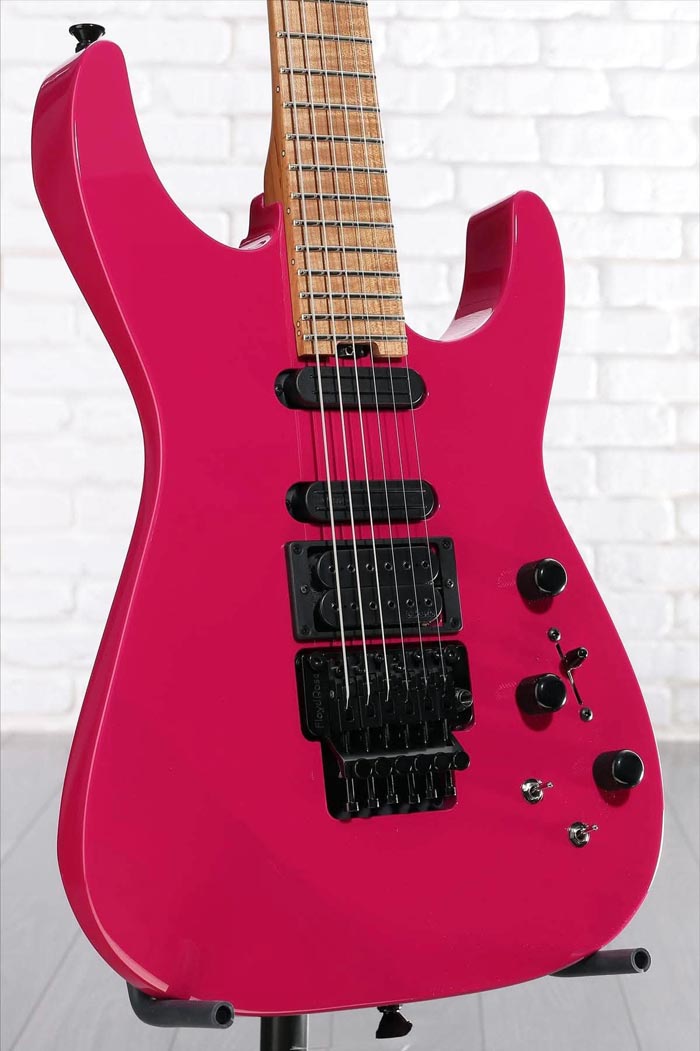
A solid Galaxy Fuchsia finish covers the body, so there isn’t a figured maple top to show off. I think that works particularly well with this color. The finish has enough visual impact on its own, while the Dinky-inspired body shape keeps the guitar recognizable as a PC1.
The combination gives this instrument an identity of its own. It retains the familiar bolt-on construction and overall design, but the different bodywood and solid finish set it apart from the more traditional versions.
NECK AND PLAYABILITY
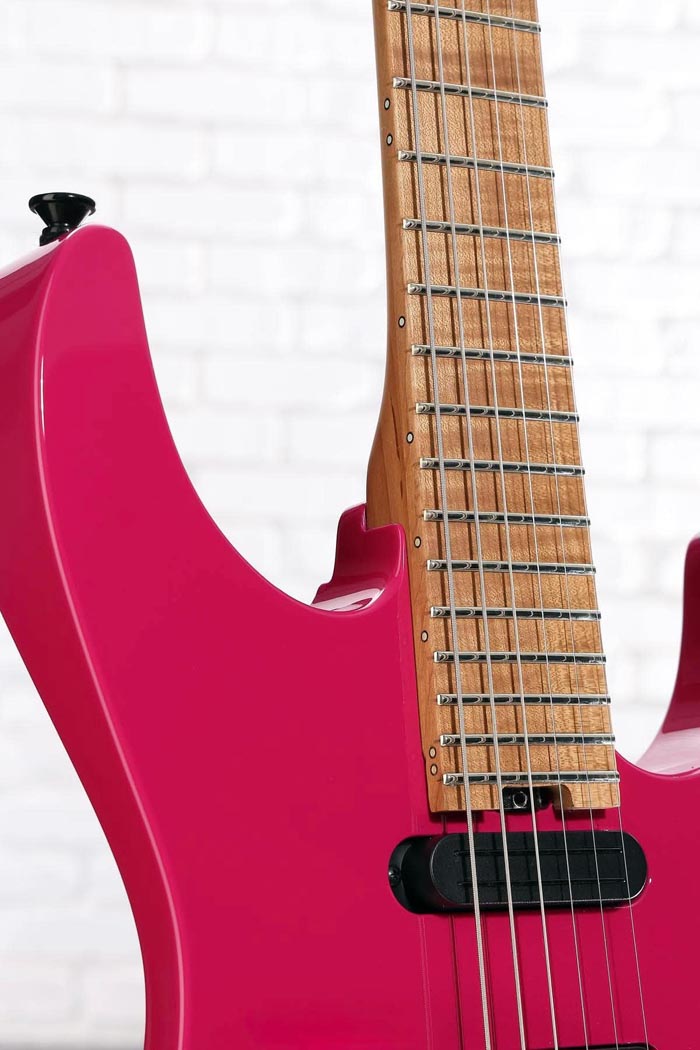
The neck and fingerboard use caramelized flame maple. The neck has the substantial, traditional PC1 profile that I expect from this model. It doesn’t feel like Jackson is trying to turn the guitar into something else with a thinner or more modern neck shape.
The fingerboard has a compound radius and 24 jumbo frets. Luminlay side dots provide the visual references you need without interrupting the clean appearance of the fingerboard. There are no conventional position markers on the face of the board.
The neck feels familiar in the best way. It retains the substantial profile that I like about the PC1, while the compound radius and jumbo frets provide the playing surface expected from a modern performance guitar.
HARDWARE
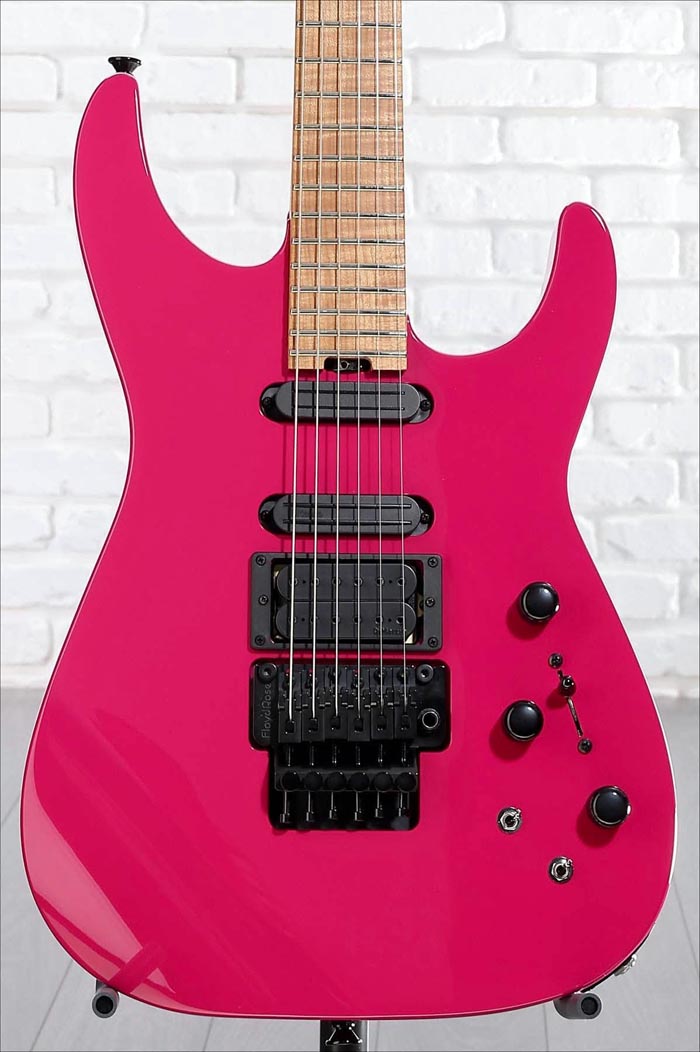
Jackson equips this PC1 with an Original Floyd Rose double-locking tremolo. This is the genuine Original Floyd Rose, and not a Korean-made 1000 Series or Special model.
The recessed installation provides the bridge with room to operate, and the double-locking design offers the tuning stability and range of pitch movement expected from this type of tremolo. It’s the proper Original Floyd Rose hardware for a Custom Shop PC1, and there’s little reason to ask for anything different here. OK, maybe the Floyd Rose 1984 model, but I’m biased!
PICKUPS AND ELECTRONICS
The pickup configuration combines a Jackson PC1 Sustainer driver in the neck position, a DiMarzio Sugar Chakra in the middle, and a DiMarzio Super 3 at the bridge. It’s an interesting combination, particularly when compared with the configurations I’ve used on earlier PC1 guitars.
The bridge and middle pickups are traditional passive pickups. The neck position serves double duty as the Sustainer driver and a conventional pickup. Each position has a distinct role, and the way they work together matters more than simply looking at the pickup names.
BRIDGE AND MIDDLE PICKUP PERFORMANCE
The DiMarzio Super 3 is a familiar pickup, and I’ve generally found it to be an excellent match for a traditional PC1. It has a thick midrange voice, rounded highs, and a compressed response that can work very well in the right guitar.
This particular PC1 arrived with 11–52 strings tuned to standard pitch. I normally use 10–46 strings on my other PC1 guitars, so the heavier set was an obvious difference. With the Super 3 in the bridge, the overall voice was quite thick and compressed. Switching to my usual 10–46 gauge helped, but hints of that character remained.
I don’t consider this a problem with the Super 3 itself. I suspect the pickup’s interaction with this guitar’s roasted alder construction plays a role. The Super 3 works well in my other PC1 guitars, but this instrument seems to benefit from a different approach.
In my opinion, a standard DiMarzio Super Distortion is a more versatile fit for this roasted alder PC1. It retains the familiar PC1 character while giving the bridge position a voice that works better alongside the Sugar Chakra. I prefer the balance of that combination in this guitar.
The Sugar Chakra is another interesting choice. It delivers the heft of a full-size humbucker in a single-coil-sized format. That gives the middle position more substance than a conventional single coil while retaining the compact footprint. It also provides a useful alternative to the bridge humbucker without making the middle position feel underpowered.
THE SUSTAINER SYSTEM
The neck position is where this PC1 makes another worthwhile improvement over some of my earlier examples. Previous PC1 guitars I’ve owned had limitations when using the Sustainer driver as a conventional pickup. The neck position wasn’t always as useful as I wanted, particularly when playing clean.
This newer example is noticeably more versatile. The Sustainer driver is a more convincing conventional neck pickup, and I find it more useful with clean amplifier settings. Compared with my first two PC1 examples, I prefer the voice and usability of this newer version. The neck position now has a more practical role in the guitar’s regular pickup configuration, even when the Sustainer is switched off.
The Sustainer itself adds another dimension to the guitar. It can hold notes and create sustained tones that would otherwise require a different approach. The controls let you engage the system and select the type of sustain response, including the fundamental and harmonic modes.
ELECTRONIC MODIFICATION POTENTIAL
The stock pickup configuration offers plenty to work with, yet there is still room for customization. A push-pull volume pot could provide additional switching options for the two traditional passive pickups.
A competent guitar tech could configure a push-pull control to split one or both passive pickups. Series and parallel switching are also possibilities for an individual pickup, depending on the desired wiring arrangement.
The Sustainer circuit adds some complexity, so this isn’t a case of blindly swapping a pot and hoping for the best. Anyone considering modifications should account for the Sustainer wiring and have the work done by someone familiar with the system. Still, the passive pickup options leave some useful possibilities open.
SPECS
Body – Roasted Alder
Finish – Gloss
Material – Roasted Alder
Shape – PC1 Dinky
Color – Galaxy Fuchsia
Orientation – Right-Hand
Platform – Artist
Product Name – Custom Shop PC1
Series – Artist Signature
Controls – Volume, Tone, Intensity Control, Active Sustainer On/Off Switch, Fundamental/Harmonic/Blend Switch
Bridge Pickup – DiMarzio Super 3
Middle Pickup – DiMarzio Sugar Chakra
Neck Pickup – PC1 Sustainer Driver
Pickup Configuration – HSS
Special Electronics – 18-Volt Jackson Sustainer System
Switching 5-Position Blade: Position 1. Bridge Pickup, Position 2. Bridge and Middle Pickup, Position 3. Middle Pickup, Position 4. Middle and Neck Pickup, Position 5. Neck Pickup
Pickguard – None
Pickup Colors – Black
Style – 2 Single-Coil / 1 Humbucking
Switch Tip – Black
Bridge – Floyd Rose Original Double-Locking Tremolo (Recessed)
Control Knobs – Dome-Style
Hardware Finish – Black
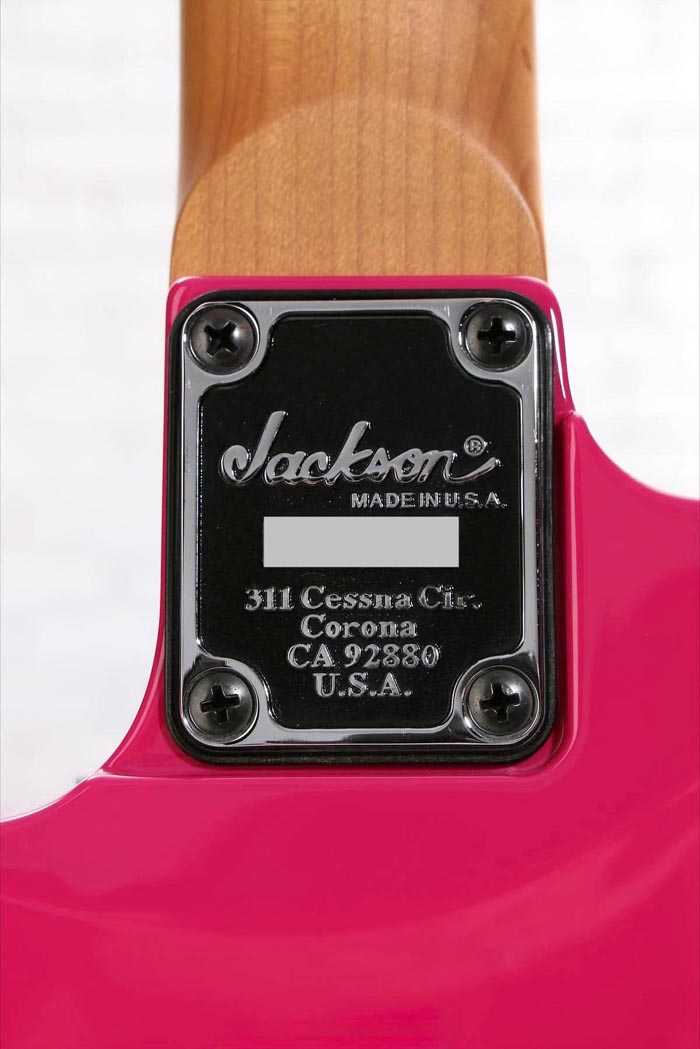
Neck Plate – Jackson 4-Bolt
Strings Nickel Plated Steel (.011-.052 Gauges)
Tremolo Arm – Floyd Rose Original
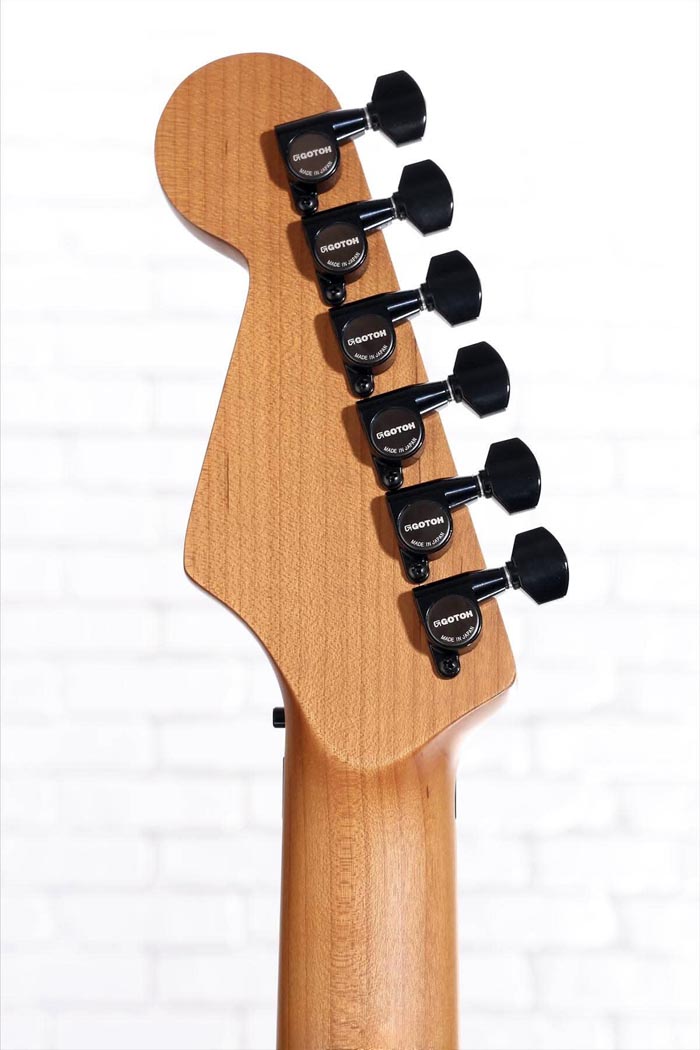
Tuning Machines – Gotoh Sealed Die-Cast
Fret Size – Jumbo
Scale Length – 25.5″ (648 mm)
Fingerboard Material – Roasted Flame Maple
Fingerboard Radius – 12″ to 16″ Compound Radius (304.8 mm to 406.4 mm)
Headstock – Licensed Fender Stratocaster
Neck Construction – Bolt-On with Graphite Reinforcement
Neck Finish – Oiled
Material – Quartersawn Roasted Flame Maple
Number of Frets – 24
Nut Material Floyd Rose Original Locking
Nut Width – 1.6875″ (42.86 mm)
Position Inlays – None
Side Dots – Luminlay
String Nut – Floyd Rose Locking
Truss Rod – Dual-Action with Wheel
DEMO
AREA OF OPPORTUNITY
My main change would be the bridge pickup. The Super 3 is a good pickup, and I still like it in a traditional PC1. In this roasted alder guitar, however, I prefer the balance and response of the standard Super Distortion.
That’s a matter of matching the pickup to this particular guitar, not a knock against the Super 3. Players who want a thicker, more compressed bridge sound may enjoy the factory configuration. I prefer the Super Distortion’s response alongside the Sugar Chakra in the middle position.
Beyond that preference, I don’t see a pressing need to change things about the guitar. The Sugar Chakra works well in the middle, and the improved conventional voice from the Sustainer driver makes the neck position more useful than it was on some of my earlier PC1 guitars.
CONCLUSION
The Jackson Custom Shop PC1 gives the familiar Phil Collen design a different personality without abandoning its roots. The roasted alder body, caramelized flame maple neck, and Galaxy Fuchsia finish set it apart from the more traditional mahogany and figured maple versions. The Original Floyd Rose and familiar PC1 neck profile keep the playing experience firmly in familiar territory.
The different specification doesn’t make this feel like an entirely different guitar. It still has the substantial neck, familiar hardware, and playing character that I expect from a PC1. The improved conventional voice from the Sustainer driver is a welcome development, and the Sugar Chakra gives the middle position some useful muscle.
Galaxy Fuchsia may have been what first caught my attention, but this PC1 has more going for it than a striking finish. It’s a distinctive variation on a guitar I already know well, and one that earns its place in the collection.
For reference, this Jackson Custom Shop PC1 guitar evaluation was conducted with the following: Fractal Axe-Fx II XL+ featuring Celestion Impluse Responses and Fractal MFC-101 MIDI Foot Controller. ADA MP-1 Tube Pre-Amp loaded with Tube Amp Doctor ECC83 Premium Selected tubes, using the ADA MC-1 MIDI Controller. Fryette LX II Stereo Tube Power Amplifier. Physical cabs in use are Marshall 1960B, Mojotone British, and Peavey 6505 cabs loaded with Celestion Classic Series Vintage 30s and Classic Series G12M Greenbacks.
Jackson Guitars Website | Facebook | Twitter | YouTube | Instagram
7 string 59 Airbucker Alnico 2 Alnico 4 Alnico 5 Alnico 8 Artist Signature Bare Knuckle BKP Brown Sound Celestion Ceramic Charvel Custom Shop DiMarzio Dual Resonance Edge EVH Fishman Floyd Rose Gibson HSP90 Humbucker Ibanez JB Jimmy Page John Petrucci Maple MJ Mojotone P90 PAF Pariah Pickup Rail Satch Seymour Duncan Singlecoil Single Width Speaker Steve Vai Tech Tip Tremolo Virtual Vintage