Bare Knuckle Painkiller Set
INTRODUCTION
The Bare Knuckle Painkiller is a pickup set that comes with a considerable reputation. One of the touring guitarists I know uses the Painkiller and regularly praises the quality of tone he gets from it. When an opportunity to get my hands on a set comes along, that’s pretty much a no-brainer.
When people hear the name Painkiller, most immediately think of Judas Priest‘s Grammy-nominated 1990 album. This is Priest at its thunderous, speed-riffing best. The twin-guitar attack delivers enough firepower to leave your bones rattling, and the record remains a benchmark for aggressive heavy metal guitar.
Guitar geeks also associate this era of Judas Priest with active pickups. That’s not what we’re dealing with here.
Active pickups have a particular appeal in aggressive music. Their onboard preamp and relatively low-impedance output deliver a different electrical interface than a conventional passive pickup. Players often appreciate their controlled response, consistent output, and compressed feel under high gain. However, passive pickups approach the problem differently. They let the pickup’s magnetic circuit, coil design, and interaction with the guitar’s electronics shape the response.
That’s where Bare Knuckle takes a different route. The Painkiller is a high-output ceramic passive humbucker designed to deliver aggressive attack, focused upper mids, and fast low-end response without relying on an active circuit.
If you’re worried that the Painkiller might sound active, fret no longer. Ha! A pun!
BACKGROUND
The Painkiller belongs to Bare Knuckle’s high-output humbucker lineup, but its character goes beyond simply pushing an amplifier harder. Its ceramic magnet and winding design emphasize attack, articulation, and upper-midrange presence.
That combination makes particular sense for players who work with heavy distortion, technical riffing, and lower tunings. A pickup needs to deliver enough output to drive an amplifier, but raw output doesn’t automatically translate into clarity. Excessive low-end energy can blur fast rhythmic passages, especially when several layers of guitars compete for space.
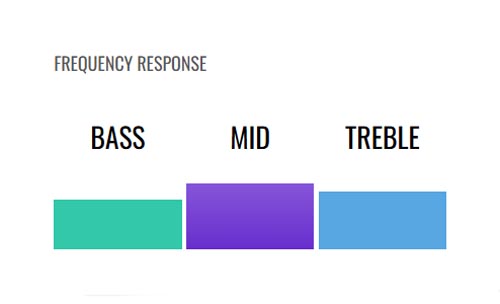
The Painkiller addresses that problem with a deliberately tight bass response and an aggressive midrange voice. The upper mids help notes retain their identity through distortion, while the controlled low end keeps palm-muted riffs and fast alternate-picked passages from turning into a muddy mess.
The ceramic magnet also contributes to the pickup’s immediate attack and assertive character. This isn’t a vintage-inspired humbucker trying to recreate the softer response of an old PAF. The Painkiller has a distinctly modern purpose, and its tonal profile reflects that.
INSTALLATION
For this installation, the Painkiller set goes into the same guitar I used for my Bare Knuckle Silo humbucker set evaluation. The wiring harness includes Bare Knuckle 550K potentiometers and capacitors.
This is a neutral-sounding, double-humbucker guitar equipped with a German-made Floyd Rose 1984 tremolo system. I’m running E standard tuning with 10-46 strings.
Keeping the same guitar and electronics provides a useful point of comparison with the previous Silo evaluation. It also gives the Painkiller a consistent platform without introducing another pickup set, wiring arrangement, or tuning variable into the equation.
For clarity, this evaluation covers the six-string Painkiller set. If you’re interested in my take on the seven-string version, you can find it HERE.
EVALUATION
BRIDGE
Let’s not kid ourselves. You’re here because you want to know how the Painkiller shreds. LOL!
If you’re looking for a metal machine, the Painkiller is your huckleberry. The bridge pickup delivers punchy, deliberate lows that make it easy to keep chugs and pedal tones under control. Palm-muted riffs have plenty of authority, but the low end doesn’t hang around longer than necessary.
The bass response is tight and articulate without becoming unnaturally lean. I wouldn’t call it quite as razor-sharp or vice-like as the Aftermath or perhaps the Juggernaut, but it’s pretty damn close. That distinction matters because the Painkiller retains enough low-end substance to keep riffs sounding full while maintaining the definition needed for fast rhythmic playing.
The midrange is where things get particularly interesting. Rather than simply producing a thick growl, the Painkiller has a sizzling roar with plenty of upper-midrange bite. Notes cut through with an aggressive presence that works exceptionally well under heavy gain. There’s enough midrange focus to keep individual notes identifiable, even when the arrangement gets dense.
And then there’s the harmonic response.
Find a harmonic. Tapped, pinched, natural, or whatever your pleasure. The Painkiller makes them jump out with very little encouragement. Harmonics have excellent clarity and sustain, and the upper-midrange emphasis helps them retain their character rather than disappearing into a wall of distortion. If you’re having trouble getting clear, sustaining harmonics from the Painkiller, go take some more lessons. HaHa!
That same articulation benefits fast lead work and technical rhythm playing. Rapid passages retain definition, and the pickup doesn’t make every note sound like one continuous blob of distortion. There’s a definite immediacy to its response that makes aggressive playing feel direct and controlled.
NECK
The Painkiller neck pickup offers a considerably different personality. It’s transparent and fluid, making it a playground for progressive metal guitarists who want clarity without sacrificing body.
I’m particularly impressed with how the lows remain full without becoming dark or muddy. That’s quite a feat for a high-output neck humbucker, especially when you consider how easily excessive bass response can compromise definition in this position.
The highs have a slightly rounded character, but there’s still plenty of edge. The pickup doesn’t sound dull or overly smooth. Instead, it maintains enough presence to keep lead passages articulate while retaining the fullness expected from a neck humbucker.
The mids are equally helpful. They’re full, yet open-sounding, without the nasal quality that can make some neck pickups difficult to work with. Notes have substance, but they don’t crowd one another.
This makes the Painkiller neck surprisingly versatile. It handles fluid, high-gain lead work with ease, but its character can also move comfortably into heavier blues and more expressive rock playing. It doesn’t feel like a pickup that exists solely to provide a softer contrast to the bridge.
THE MIDDLE POSITION
Combining the bridge and neck pickups brings another dimension to the Painkiller set. The resulting sound has a modern, deep character that works particularly well for clean passages.
That’s an interesting contrast with the aggressive personalities of the individual pickups. The bridge delivers plenty of bite, while the neck supplies fullness and fluidity. Together, they produce a broader voice that doesn’t simply sound like a compromise between the two.
It’s a useful reminder that high-output pickups don’t have to spend their entire lives buried under distortion. The Painkiller set has enough tonal character to offer something worthwhile when you back off the gain.
SPECS
BKP Painkiller Bridge
Series – 15.435 K
Inductance – 6.122 H
Split – 7.899 K
Split – 7.564 K
Parallel – 3.859 K
Magnet – Ceramic
BKP Painkiller Neck
Series – 13.513 K
Inductance – 5.396 H
Split – 6.823 K
Split – 6.722 K
Parallel – 3.382 K
Magnet – Ceramic
13K in the neck?!? Yep! There are plenty of neck humbuckers with hotter winds. Done right, like the Painkiller, it will reveal new options for your tonal palette.
DEMO
CONCLUSION
The Bare Knuckle Painkiller is a formidable choice for players who want aggressive output, focused mids, and controlled low-end response. Its combination of ceramic magnet attack and strong upper-midrange presence makes it particularly well suited to modern high-gain applications.
The obvious homes include progressive metal, technical metal, Djent, thrash, death metal, extreme metal, metalcore, and hardcore punk. It also has plenty to offer players working in hard rock, heavy rock, grunge, and progressive rock. The neck pickup’s fluid response and the modern clean character of the middle position give the set some additional flexibility beyond its obvious metal credentials.
I consider the Painkiller a modern take on the legendary distortion-class humbucker. It delivers the aggression and output you’d expect, but the controlled bass response and articulate midrange give it a more deliberate voice than simply throwing more gain at the amplifier.
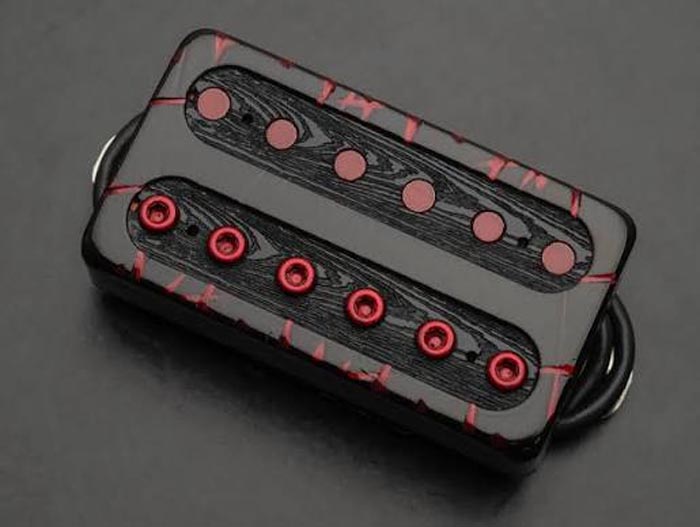
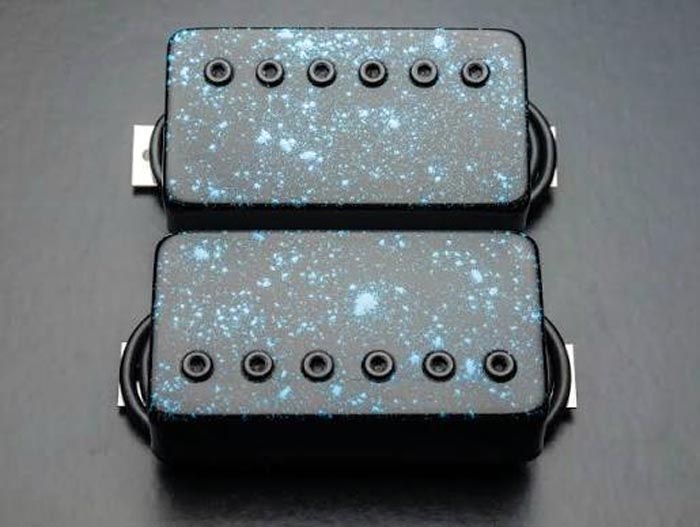
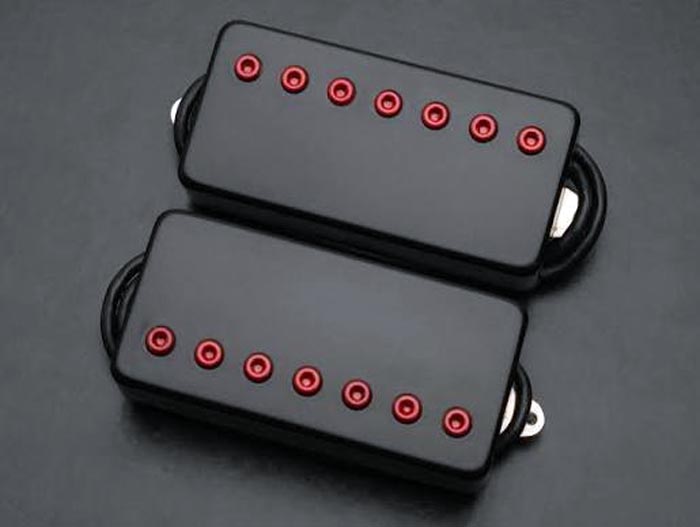
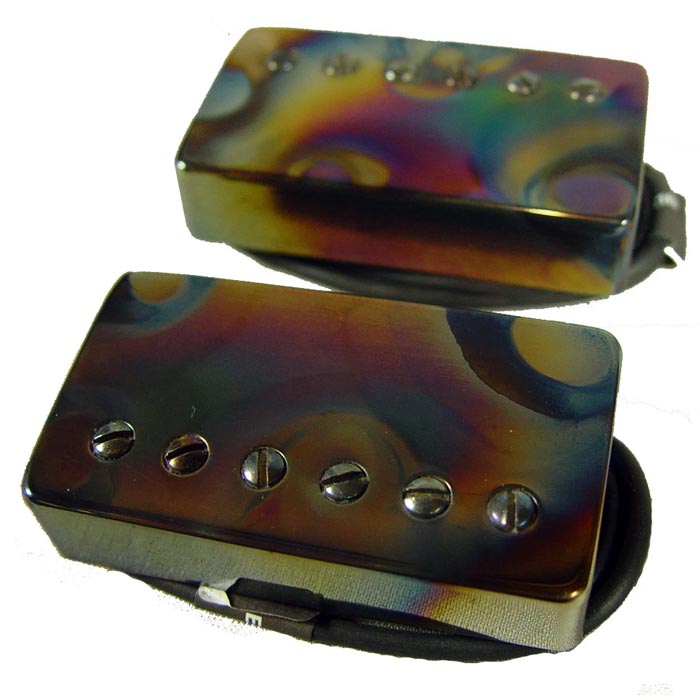
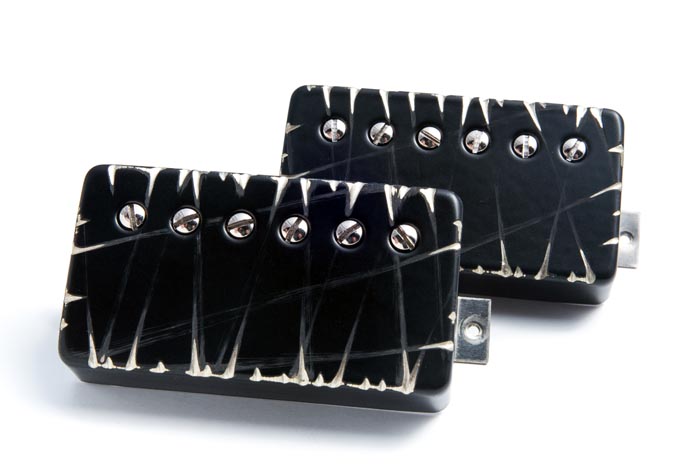
Like most Bare Knuckle humbuckers, the Painkiller is available in six-, seven-, and eight-string variations. Buyers can also choose from an extensive selection of bobbin colors, pole screw options, pickup covers, and radiator covers to personalize their set.
If your playing demands tight rhythmic response, aggressive upper mids, and harmonics that practically leap off the fretboard, the Painkiller deserves serious consideration.
For reference, this Bare Knuckle Painkiller humbucker pickup set evaluation was conducted with the following: Fractal Axe-Fx II XL+ featuring Celestion Impluse Responses and Fractal MFC-101 MIDI Foot Controller. ADA MP-1 Tube Pre-Amp loaded with Tube Amp Doctor ECC83 Premium Selected tubes, using the ADA MC-1 MIDI Controller. Fryette LX II Stereo Tube Power Amplifier. Physical cabs in use are Marshall 1960B, Mojotone British, and Peavey 6505 cabs loaded with Celestion Classic Series Vintage 30s and Classic Series G12M Greenbacks.
Bare Knuckle Pickups Website | Facebook | Twitter | YouTube | Instagram
7 string 59 Airbucker Alnico 2 Alnico 4 Alnico 5 Alnico 8 Artist Signature Bare Knuckle BKP Brown Sound Celestion Ceramic Charvel Custom Shop David Shepherd DiMarzio Dual Resonance Edge EVH Fishman Floyd Rose Gibson HSP90 Humbucker Ibanez JB Jimmy Page John Petrucci MJ Mojotone P90 PAF Pariah Pickup Rail Satch Seymour Duncan Singlecoil Single Width Speaker Steve Vai Tech Tip Tremolo Virtual Vintage