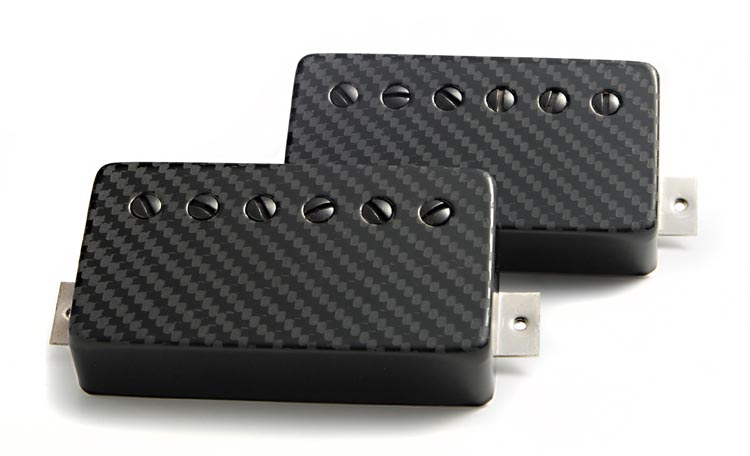
Bare Knuckle Ragnarok Set
INTRODUCTION
Ragnarök, according to Old Norse literature, represents the fate or twilight of the gods. I cannot let a name like that slide without throwing a little Wagner into the mix. Richard Wagner’s Götterdämmerung, or Twilight of the Gods, seems like an appropriate soundtrack for a pickup named Ragnarok.

There is a little more to that connection than the name, too. Wagner is known for his use of textures, harmonies, and orchestration to create enormous musical landscapes. Periphery takes a similarly layered approach to modern progressive metal, with multiple guitars contributing to an expansive and highly detailed sonic picture. Misha Mansoor sits at the center of much of that guitar-driven approach.
I have covered several models used by other members of Periphery, but the Ragnarok is my first experience with one of Misha’s signature pickup designs. That makes this review a little overdue.
Prog metal, djent, and metalcore are not normally in my wheelhouse. That probably explains why it takes me a while to get around to the Ragnarok. It also makes this pickup a good reminder that we should not always judge the book by its cover.
The Ragnarok certainly looks like it belongs in a particular musical neighborhood. The interesting part is how far it can travel outside that neighborhood.
BACKGROUND
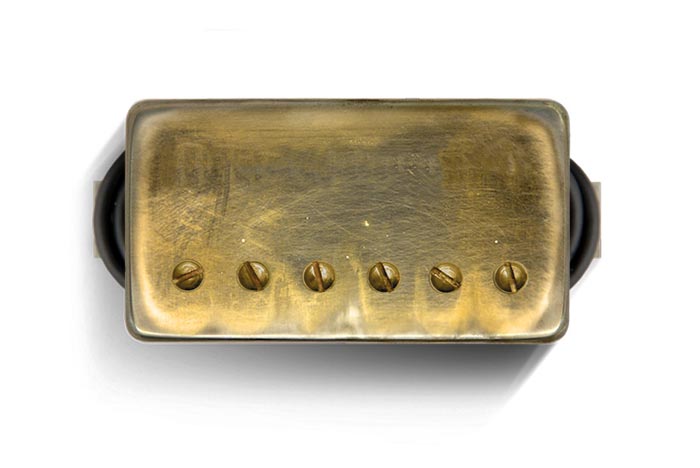
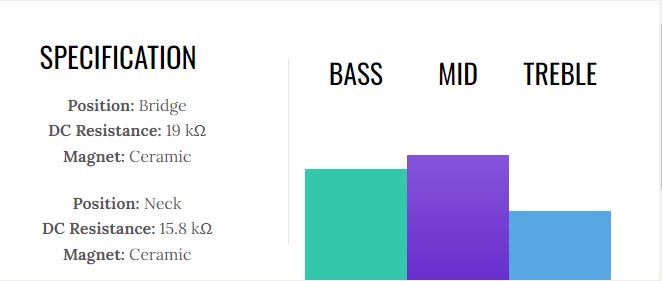
Bare Knuckle Pickups positions the Ragnarok as a high-output ceramic humbucker designed around the demands of modern progressive and extreme metal. The current specifications advertise a 19 kΩ bridge pickup and a 15.8 kΩ neck pickup, with both using ceramic magnets. Those numbers tell part of the story, but they do not tell the whole story.
A high-output ceramic humbucker can easily become overly aggressive, excessively compressed, or difficult to use outside of high-gain applications. The Ragnarok takes a more balanced approach. Its tonal profile gives the player substantial low end, an assertive midrange, and enough high-frequency response to maintain clarity without making the pickup unnecessarily sharp.
That combination is what makes the Ragnarok more interesting than its reputation might suggest.
INSTALLATION
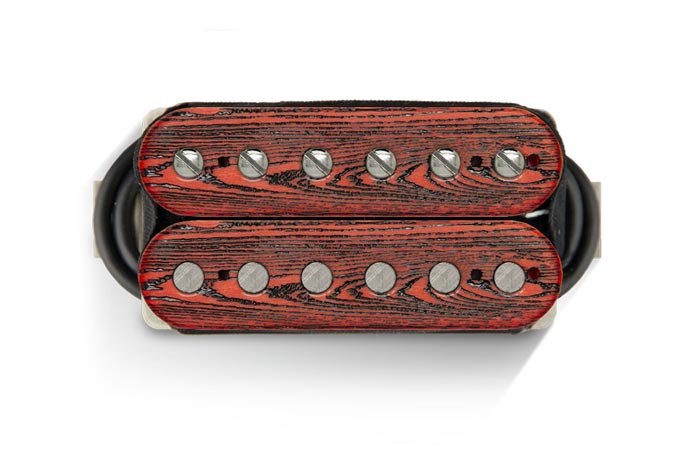
The Ragnarok set I have on hand is the six-string version with short legs, four-conductor lead wire, open bobbins, and the standard pole configuration.
Installation is in a dual-humbucker guitar with 500k pots, a Switchcraft 12120X three-way toggle, and a Pure Tone Full Contact 1/4-inch output jack.
The Ragnarok therefore gets a fairly conventional passive electronics setup. There is nothing unusual about the wiring or controls that artificially colors the evaluation. The pickups have the opportunity to show what they bring to the guitar.

EVALUATION
The Ragnarok makes a strong first impression. Both the neck and bridge pickups offer plenty of output, but what catches my attention first is not simply how much power they produce. The overall voice has considerably more range than I expect from a pickup associated so closely with prog metal and djent.
A big open chord produces a harmonically rich and expansive sound, with individual notes retaining plenty of presence while the overall chord maintains enough body to sound substantial. Add gain and the pickup moves naturally into more aggressive territory without losing that character.
Given the Ragnarok’s specifications and its association with modern progressive metal, it would be easy to assume that it is designed to spend its entire life at full throttle. That is not really the case. The pickup certainly has an aggressive character, but there is enough balance in the overall tonal response to make it useful in situations where maximum brutality is not the objective.
LOWS
The low end is powerful and big, but it leans more toward punch than sheer mass. That is an important distinction with a high-output pickup because there is a considerable difference between a bottom end that becomes boomy or flabby and one that becomes so dry and rigid that the guitar loses some of its natural character.
The Ragnarok sits comfortably between those extremes. The low strings have authority, particularly with high-gain rhythm playing, but they do not simply turn into a wall of indistinct bass. Palm-muted passages have plenty of punch, while open chords retain a useful amount of bloom.
Players looking for the extremely precise, almost gated bottom end associated with some modern metal pickups may find the Ragnarok a little more relaxed. I consider that a benefit because it gives the pickup more room to work in other styles. There is enough control for complex high-gain rhythm work without sacrificing the natural qualities that make a guitar sound like a guitar.
MIDS
The midrange is where the Ragnarok really gets interesting for me. I cut my teeth on a very mid-centric pickup, so the middle frequencies are an important part of how I evaluate a pickup. The resonant peak and the way a pickup handles the mids can have a tremendous effect on how well it works with a particular guitar and amplifier combination.
The Ragnarok delivers plenty of midrange character. It can bark, snarl, growl, roar and bite, but those qualities do not completely overwhelm the fundamental character of the guitar. There is enough complexity in the mids to keep the pickup useful across different gain levels and playing approaches.
With the amplifier dialed in appropriately, changing the amount of gain, adjusting the EQ or simply changing the way the strings are attacked produces noticeable changes in the pickup’s response. The strong midrange therefore becomes more useful than simply having a pronounced mid hump.
For rhythm playing, the mids give the guitar authority and definition. For leads, they help notes remain present and expressive without requiring excessive treble.
HIGHS
I’ll admit that the high end initially gives me some concern. Bare Knuckle describes the Ragnarok as having a smooth high-frequency response, and its tonal profile reflects a more controlled top end. With a pickup designed for high-gain applications, I wonder whether that approach leaves enough treble available for clarity and articulation.
Once I spend some time with it, that concern goes away. Higher-register leads and solos have plenty of clarity and edge in both positions, and the Ragnarok does not need an exaggerated treble peak to maintain definition.
The combination of the midrange and high end also makes harmonics easy to produce. Squeals and other artificial harmonics respond readily to the player’s technique, while the controlled top end keeps them from becoming excessively sharp.
For players who want high-frequency detail without allowing the pickup to dominate the overall tonal balance, that combination works particularly well.
VERSATILITY
This is where the Ragnarok exceeds my expectations. Its obvious applications include prog metal, djent, metalcore, tech metal, hardcore and extreme metal. The pickup has the output, aggression and clarity those styles demand, so there is no mystery about where it fits in that territory.
What interests me more is how naturally it moves into other territory. Prog rock makes sense. Thrash makes sense. Hard rock makes sense. Classic rock is not nearly as strange as the name Ragnarok might suggest.
I also find the set quite suitable for heavy blues and what I like to call spandex-clad riff rock. The combination of a substantial low end, strong mids and controlled highs gives the pickup enough personality to remain interesting as the gain comes down.
That makes the Ragnarok a particularly useful choice for players who move between different styles rather than spending an entire evening trying to make the amplifier sound like it is preparing for the apocalypse.
SPECS
Bridge
Series – 19.1323 K
Inductance – 6.607 H
Split – 9.554 K
Split – 9.589 K
Parallel – 4.784 K
Magnet – Ceramic
Neck
Series – 16.723 K
Inductance – 5.417 H
Split – 8.399 K
Split – 8.356 K
Parallel – 4.183 K
Magnet – Ceramic
16 K? Yep. There’s a lot of wire on that neck pickup. Sometimes it’s not the amount of the wire, but what you can do with it. And maybe sometimes, it’s both. The Ragnarok neck position definitely has power on tap. But it does so without putting it in your face. There’s a lot of transparency going on and a lot of sustain as well. If you’re looking for a powerful neck humbucker that doesn’t fall into the stereotypical traps of sounding dull or stuffy or honky, give the Ragnarok a tumble.
DEMO
Here’s a demo of Misha Mansoor playing a 7-string Ragnarok set:
Looking for something of the 6-string variety and in a different genre? Look no further:
Conclusion
The Ragnarok is a pickup set that earns its reputation for high-output performance, but its usefulness does not stop there. The ceramic magnets, substantial output, focused low end, aggressive midrange, and controlled high end give it the characteristics needed for modern progressive metal and other demanding high-gain applications.
For my money, the Ragnarok succeeds because it does not require the player to stay inside one particular musical lane. It provides the output and aggression expected from a Misha Mansoor signature pickup while retaining enough tonal balance to make it useful well beyond its obvious home territory.
Prog metal, prog rock, thrash, hardcore, extreme metal, tech metal, classic rock, hard rock, heavy blues, and spandex-clad riff rock all have a place on the Ragnarok’s resume. And that makes this one of those pickups that is considerably more interesting once you get past the name, the specifications, and the obvious association with djent.
For reference, this Bare Knuckle Pickups Ragnarok humbucker pickup set evaluation was conducted with a Fractal Axe-Fx II XL+ featuring Celestion Impluse Responses and Fractal MFC-101 MIDI Foot Controller. ADA MP-1 Tube Pre-Amp loaded with Tube Amp Doctor ECC83 Premium Selected tubes, using the ADA MC-1 MIDI Controller. Fryette LX II Stereo Tube Power Amplifier. Real cabs in use are Marshall 1960B, Mojotone British, and Peavey 6505 cabs loaded with Celestion Classic Series Vintage 30s, Classic Series G12M Greenbacks, and Heritage Series G12-65s.
Bare Knuckle Pickups Website | Facebook | Twitter | YouTube | Instagram
7 string 59 Airbucker Alnico 2 Alnico 4 Alnico 5 Alnico 8 Artist Signature Bare Knuckle BKP Brown Sound Celestion Ceramic Charvel Custom Shop David Shepherd DiMarzio Dual Resonance Edge EVH Fishman Floyd Rose Gibson HSP90 Humbucker Ibanez JB Jimmy Page John Petrucci MJ Mojotone P90 PAF Pariah Pickup Rail Satch Seymour Duncan Singlecoil Single Width Speaker Steve Vai Tech Tip Tremolo Virtual Vintage