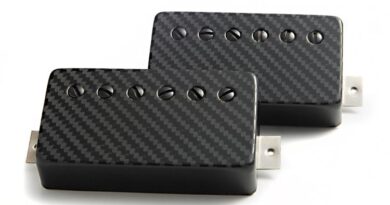
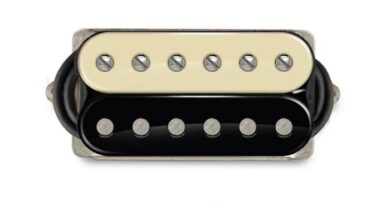
DiMarzio Steve Morse Signature Set
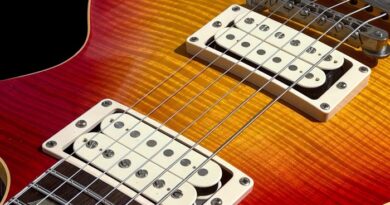
Header photo by Larry DiMarzio
ENTER THE MORSE CODE
Steve Morse has never been particularly interested in keeping his guitar playing inside a neat little box. His work with the Dixie Dregs blends progressive rock, jazz, country, fusion, and rock, while his later work with Kansas, Deep Purple, Flying Colors, and his solo projects takes that musical vocabulary even further.
That kind of playing puts some unusual demands on a guitar. Morse moves from intricate passages and rapid picking to melodic leads and heavy rock phrasing, often covering a considerable portion of the fretboard in the process. His signature DiMarzio pickups are designed around those demands rather than simply following the usual formula of a hot bridge and a warm neck.
The DiMarzio Steve Morse Signature humbucker set are particularly interesting because each pickup has a very specific role. The neck model intends to provide a smoother, fuller response for higher register playing, while the bridge model delivers more attack and power for lower notes. They work together without trying to sound like two versions of the same pickup.
There are also some interesting numbers hiding in the specifications. They don’t necessarily tell the story you might expect, which makes these pickups worth examining from both the engineering and playing perspectives.

BEFORE THE SIGNATURE
Steve Morse’s reputation as a guitarist comes from more than technical ability. His playing combines precision with an unusually broad musical vocabulary, and the Dixie Dregs provide an early showcase for that approach. The band’s music moves freely between progressive rock, jazz, country, fusion, and instrumental rock, giving Morse plenty of room to develop the techniques and phrasing that become central to his career.
His work later expands into Kansas, Deep Purple, Flying Colors, and numerous solo projects. Across those settings, Morse continues to move between rhythm work, melodic passages, intricate instrumental sections, and technically demanding lead playing. A conventional pickup design doesn’t necessarily address all of those requirements equally well.
Morse’s relationship with DiMarzio begins before the Music Man signature guitar becomes available to the public. The Steve Morse Model Bridge arrives in 1983 and becomes DiMarzio’s first artist signature pickup. The pickup is developed around Morse’s requirements for a powerful bridge position, particularly when playing lower notes that need to remain prominent.
The Steve Morse Model Neck follows in 1985 as the Music Man signature guitar is in development. The instrument itself becomes available to players a few years later, but the pickup designs are already established around Morse’s preferred approach to the instrument.
That history helps explain why the two pickups are so different. Morse doesn’t use the neck and bridge positions simply as two places to get roughly the same sound. He uses them for different musical purposes, and DiMarzio builds each pickup accordingly.
The neck model provides a smoother and fuller response for higher register notes, particularly during leads and solos. The bridge model takes a more forceful approach, giving lower notes additional attack and power so they can jump out with authority.

GETTING WIRED
The Steve Morse set use a conventional full size humbucker format, so installation is straightforward for a guitar already equipped for standard humbuckers. The electrical differences between the two models make the final setup more important than the physical installation itself.
Pickup height deserves particular attention with this set because the bridge and neck models have substantially different output levels. Setting both pickups at the same physical height isn’t necessarily going to produce the best balance. The final adjustment should account for the output of each pickup as well as the way each responds to the strings.
The neck pickup needs to retain the smooth and full character intended for higher register playing. The bridge needs enough authority to deliver its additional attack without overpowering the rest of the guitar. Small changes in height can alter volume, attack, and the overall balance between the two positions.
As with any pickup installation, the best setup comes from making adjustments while the guitar is tuned to pitch and connected to the actual amplifier and effects used for playing. This is particularly important with a design around such different output characteristics.

DC RESISTANCE VS. OUTPUT
The Steve Morse models provide an excellent opportunity to clear up one of the more persistent misconceptions surrounding guitar pickups. DC resistance is useful information, but it isn’t a direct measurement of pickup output. Treating the resistance number as a simple hotness rating can produce some seriously misleading conclusions.
The reason starts with the pickup winding. Different wire gauges occupy different amounts of space on the bobbin, so the number of turns that can fit into that space changes with the wire. Thicker wire takes up more room with each turn, while thinner wire allows more turns to fit onto the same bobbin.
That means two pickups can have very different resistance measurements without producing similar levels of output. Magnet characteristics, inductance, winding configuration, and other design factors also affect how much signal a pickup produces and how it responds to the strings.
The Steve Morse Model Neck demonstrates this particularly well. Its 21.00 kΩ DC resistance is a number that many players would associate with an extremely hot humbucker. DiMarzio rates its output at 250 mV, however, and places it in the company’s Vintage / PAF Output category.
The bridge model provides the opposite example. Its resistance measures only 9.94 kΩ, yet its output reaches 450 mV. DiMarzio classifies that as High Power, with a listed output that exceeds both the Super Distortion at 425 mV and the Super 3 at 435 mV.
The important point isn’t that DC resistance doesn’t matter. It provides useful information about the winding and can be helpful when comparing pickups from the same manufacturer. It simply shouldn’t be treated as an output measurement. The Steve Morse models make that distinction particularly difficult to ignore.

TWO PICKUPS. TWO JOBS. PLENTY OF ATTITUDE.
Steve Morse Model Neck
The Steve Morse Model Neck makes a lot more sense once you consider where Morse uses it. The neck position needs to give higher register notes a smoother, fuller character for lead playing and solos. It doesn’t need to punch the amplifier in the throat to complete the assignment. Morse wants the neck position to provide a smoother, fuller feel when he moves into lead playing and solos. The pickup therefore doesn’t need to overwhelm the amplifier to do its job.
The response gives higher notes some additional body while maintaining the definition needed for detailed playing. That matters with Morse because his lead work can move quickly between individual notes, bends, and intricate passages. A neck pickup that becomes excessively soft or indistinct would work against that style.
The lower output also leaves more room for picking dynamics. The amplifier isn’t being driven as hard by the pickup, so the player’s attack has more influence over how the note develops. A lighter touch can keep things smooth, while digging in brings more edge and authority without simply turning everything into a louder version of the same note.
Steve Morse Model Bridge
The Steve Morse Model Bridge has a very different job. Morse wants more power and attack from the bridge position, particularly when he’s working the lower register. This pickup brings plenty of both without needing some ridiculous DC resistance number to prove its credentials. Morse wants the bridge position to provide more power and attack, particularly when playing lower notes. The pickup delivers that extra authority without relying on an unusually high DC resistance figure.
The stronger output gives the amplifier more signal to work with, which becomes increasingly useful once the amplifier starts getting dirty. Notes respond more immediately, and the additional attack helps lower register passages retain their definition when the playing gets dense.
That extra push also makes the bridge pickup particularly well suited to rock and heavier applications. It has enough output to drive a high gain amplifier aggressively, while the attack keeps individual notes from collapsing into one big bucket of fuzz and regret.
The bridge model therefore feels more forceful than the neck, but that isn’t the same thing as simply being louder. Its attack and response are part of what makes it appropriate for the lower register. Morse can move to the bridge position and get a distinctly different response from the guitar rather than simply getting another variation of the neck sound.
The Two Pickup Combination
The real trick to the Steve Morse set is how these two very different pickups work together. Their differences are intentional, and instead of creating an obvious mismatch, they give each position a distinct job. Their differences are intentional, and those differences make the guitar more versatile rather than creating an obvious mismatch.
The neck model is smoother and fuller, with the output characteristics suited to higher register lead work. The bridge model has substantially more power and attack, giving lower notes the additional push Morse wants from that position.
That approach also explains why the specifications look so strange when viewed together. The neck has more than twice the DC resistance of the bridge, yet the bridge produces considerably more output. Once the musical purpose of each pickup is understood, the numbers make much more sense.
That’s what makes the Steve Morse set more interesting than a conventional matched pair. Resistance, magnet characteristics, winding, inductance, output, and frequency response all contribute to the final result, but none of those characteristics exists in isolation. DiMarzio has to make all of them work with the way Morse actually plays, and that is ultimately what makes these two pickups such an effective combination.

WHEN THE NUMBERS GET WEIRD
Series – 9.94 K
Output – 450 mV
Magnet – Ceramic

Series – 21.00 K
Output – 250 mV
Magnet – Ceramic

CRANK IT AND FIND OUT
Steve Morse Explains His Tone Philosophy with DiMarzio
CONCLUSION
The DiMarzio Steve Morse signature set isn’t designed around the idea that a matched pickup set needs matching output. Instead, each pickup addresses a different requirement in Morse’s playing, with the neck providing a smoother and fuller response for higher register work and the bridge delivering additional power and attack for lower notes.
That approach makes the set more interesting than its signature status might suggest. The two pickups aren’t simply different flavors of a high output humbucker. They occupy different roles and give the player meaningful tonal and dynamic changes when moving between positions.
More importantly, the pickups demonstrate what happens when those design decisions begin with a guitarist’s technique rather than a specification sheet. Morse needs the neck and bridge to do different things, so DiMarzio gives him two distinctly voiced tools that work together because they are different.
That’s what makes the Steve Morse Model set worth a closer look. It isn’t simply a pair of pickups carrying the name of a legendary guitarist. It is a deliberately engineered system built around how that guitarist actually uses the instrument.
For reference, this DiMarzio Steve Morse signature pickup evaluation was conducted with the following: Fractal Axe-Fx II XL+ featuring Celestion Impluse Responses and Fractal MFC-101 MIDI Foot Controller. ADA MP-1 Tube Pre-Amp loaded with Tube Amp Doctor ECC83 Premium Selected tubes, using the ADA MC-1 MIDI Controller. Fryette LX II Stereo Tube Power Amplifier. Physical cabs use are Marshall 1960B, Mojotone British, and Peavey 6505 cabs loaded with Celestion Classic Series Vintage 30s and Classic Series G12M Greenbacks.
DiMarzio Website | Facebook | Twitter | YouTube | Instagram
7 string 59 Airbucker Alnico 2 Alnico 3 Alnico 4 Alnico 5 Alnico 8 Bare Knuckle BKP Brown Sound Celestion Ceramic Charvel Custom Shop David Shepherd DiMarzio Dual Resonance Edge EVH Fishman Floyd Rose Gibson HSP90 Humbucker Ibanez JB Jimmy Page John Petrucci MJ Mojotone P90 PAF Pariah Pickup Satch Satriani Seymour Duncan Singlecoil Single Width Speaker Steve Vai Tech Tip Tremolo Virtual Vintage