DiMarzio MegaDrive
INTRO / BACKGROUND
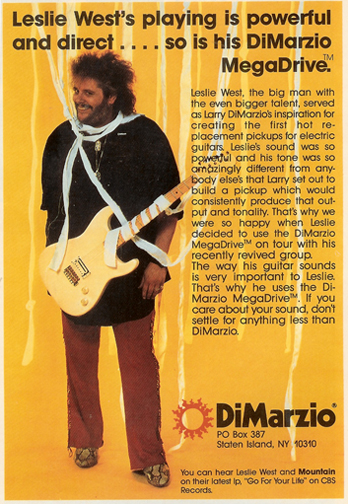
Some pickups do not need an artist’s name attached to them to have a certain pedigree. The DiMarzio MegaDrive DP107 is one of these. Released in the 1980s, the MegaDrive becomes associated with players including Leslie West of Mountain, Tony MacAlpine and Scott Dalhover of Dangerous Toys. West’s massive hard rock sound is probably the most recognizable connection, but the pickup finds its way into several different styles.
DiMarzio now offers the MegaDrive through its Custom Shop, which makes it less common than many of the company’s regular production models. That alone makes finding one a little more interesting, particularly for players who know the model from its earlier years. It has been around since the 1980s. Apparently, it still has a few amps left to piss off.
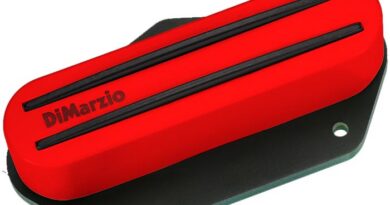
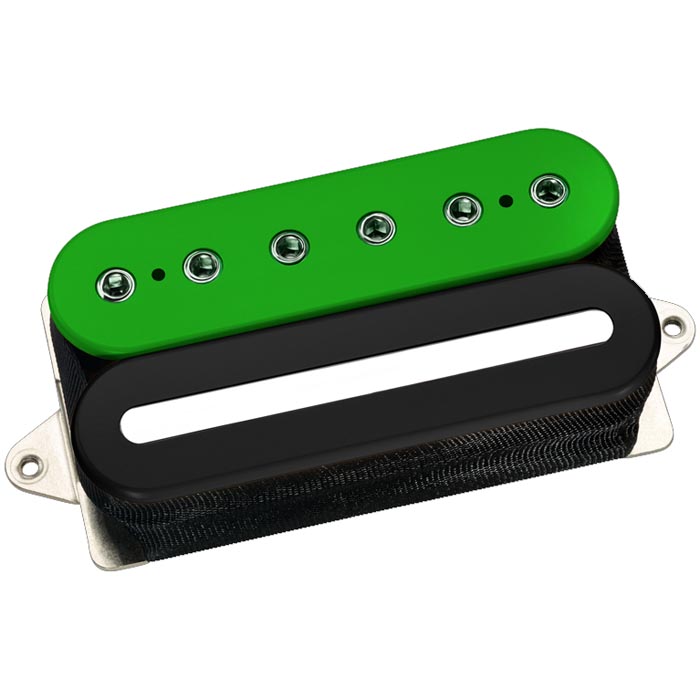
The MegaDrive also predates several later DiMarzio designs that use a similar one blade / one screw arrangement. One coil uses conventional screw pole pieces while the other uses a blade. This gives the pickup an unusual physical design that becomes part of the company’s pickup lineage.
There is no shortage of hot ceramic humbuckers from the era, but the MegaDrive has more going on than a big number and a loud amp. The combination of its two different coils gives this old school high output pickup a few tricks that are still worth exploring.
DUAL RESONANCE
MegaDrive uses DiMarzio Dual Resonance design, which changes the way the coils interact with each other.
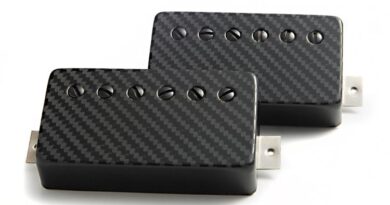
Dual Resonance is basically mis-matched coils. It’s common for several pickup companies to allow about a 5% variance. But Dual Resonance is an intentional mis-matching of the coils to produce a specific “tuning” of the pickup’s voice. According to the patent, it is pretty much about putting a similar number of turns on each coil. But with different wire gauges.
In the image below, you will see that the left bobbin has a skinnier wind than the right bobbin. Yet both bobbins have a similar number of turns. It is the wire gauge that is different. with the left having a smaller gauge and the right having a larger.

courtesy of Guitar Pickup Database
INSTALLATION
The MegaDrive goes into the same two humbucker super strat used for several other DiMarzio pickups. The guitar has a maple body, maple neck and maple fingerboard, along with a German double locking Floyd Rose tremolo. A Switchcraft three way toggle and CTS volume controls handle the electronics.
The guitar also has independent switching for series and parallel operation, giving the MegaDrive more than its standard humbucker configuration. That makes it possible to explore the pickup’s different wiring options without changing the basic installation.
The pickup initially goes in with the screw coil toward the bridge. After spending time with it in that orientation, the MegaDrive gets flipped so the blade coil sits toward the bridge.
The change is straightforward. There is no need to modify the wiring or alter the guitar. The pickup simply comes out, rotates 180 degrees and goes back into the same route.
That makes orientation particularly easy to experiment with during an evaluation. Both coils remain part of the same humbucker, but their physical relationship to the bridge changes.
EVALUATION
Overall Character
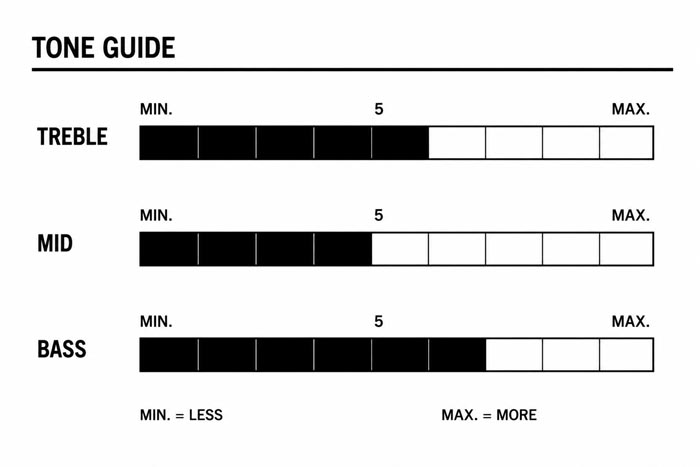
The MegaDrive has plenty of output, but it does not have the congested quality that sometimes comes with high output humbuckers. The low end is punchy and controlled, with enough weight to keep the notes substantial without allowing the bass to become loose under heavy gain.
The mids have a combination of snarl and growl without dominating the sound. There is enough upper frequency presence to keep the pickup articulate, while the overall voice retains some heft.
Pick attack comes through clearly, and changes in picking pressure produce noticeable changes in the response. The pickup also responds well to finger movement and makes pinch and tapped harmonics easy to coax out of the guitar.
Clean Tones
The MegaDrive’s output becomes immediately noticeable on a clean amp. A strong picking hand can push the front end toward breakup. The guitar’s volume control becomes useful for bringing the pickup back under control. Players who prefer a completely clean response may need to adjust the amp rather than simply plug in and forget about it.
Parallel wiring reduces some of the density and output, although the pickup can still push a clean amp harder than expected.
Splitting to the lower resistance screw coil provides another option, producing a brighter and more open sound when a cleaner, more chimey voice is needed. It does not turn the MegaDrive into a vintage single coil. But it gives the guitar another useful sound without adding another pickup.
High Gain
The MegaDrive’s output and voicing work particularly well with higher gain. The low end remains controlled, while the midrange keeps distorted notes from becoming indistinct. There is enough upper harmonic content to keep the sound lively without making the pickup feel thin.
The pickup has plenty of punch for hard rhythm work, but it does not flatten the attack when the gain comes up. Chords retain enough separation to hear what is being played, while single notes have enough weight to stay substantial.
The response also rewards aggressive picking. Dig into the strings and the MegaDrive responds immediately. Back off the attack and it cleans up enough to change the character without requiring a different pickup or amp setting.
Pinch harmonics and tapped harmonics come easily, and sustained notes develop enough harmonic content to keep them from sounding static. There is plenty of aggression here, but it does not come at the expense of the player’s hands showing through.
That’s where the MegaDrive gets particularly useful for high gain work. It can hit the front end hard without turning everything into the same wall of distortion.
Pickup Orientation
The ability to reverse the MegaDrive is more useful than it might initially appear. With the screw coil toward the bridge, the pickup has a balanced and aggressive voice. Flipping it so the blade coil sits toward the bridge produces a little more focus and articulation.
The difference does not turn the MegaDrive into two completely different pickups. The overall character remains recognizable in either orientation, but the emphasis changes enough to make the experiment worthwhile.
The blade toward the bridge provides a little more concentration. While the screw coil gives the pickup its own slightly different response. Neither orientation is inherently correct, so the choice comes down to the guitar and the player’s preference.

SPECS
Series – 16.49 K
Inducatance – 5.873 H
Split – 4.887 K
Split – 11.631 K
Parallel – 3.445 K
Magnet – Ceramic
Output – 350 mV
DEMO
TONY MACALPINE Key To The City Official Video
CONCLUSION
The MegaDrive covers hard rock, high gain metal, progressive styles and thrash particularly well, while its response gives it enough flexibility for fusion, funk and other applications. It has plenty of horsepower when you need to hit an amp hard, but it does not lose its personality when you back things down.
There is no separate MegaDrive neck model. DiMarzio has recommended the PAF Pro as a suitable companion, which makes sense for a guitar where the bridge position is doing the heavy lifting. The PAF Pro brings a more traditional DiMarzio voice to the neck without trying to duplicate everything the MegaDrive is doing at the bridge.
It may not be one of DiMarzio’s most visible pickups today, but the design still works. There is plenty of output, harmonic response and aggression here, along with enough openness to keep the MegaDrive from turning into another compressed, one trick high gain pickup.
For reference, this DiMarzio MegaDrive DP107 bridge humbucker pickup evaluation was conducted with the following: Fractal Axe-Fx II XL+ featuring Celestion Impulse Responses and Fractal MFC-101 MIDI Foot Controller. ADA MP-1 Tube Pre-Amp loaded with Tube Amp Doctor ECC83 Premium Selected tubes, using the ADA MC-1 MIDI Controller. Fryette LX II Stereo Tube Power Amplifier. Physical cabs use are Marshall 1960B, Mojotone British, and Peavey 6505 cabs loaded with Celestion Classic Series Vintage 30s and Classic Series G12M Greenbacks.
DiMarzio Website | Facebook | Twitter | YouTube | Instagram
7 string 59 Airbucker Alnico 2 Alnico 3 Alnico 4 Alnico 5 Alnico 8 Bare Knuckle BKP Brown Sound Celestion Ceramic Charvel Custom Shop David Shepherd DiMarzio Dual Resonance Edge EVH Fishman Floyd Rose Gibson HSP90 Humbucker Ibanez JB Jimmy Page John Petrucci MJ Mojotone P90 PAF Pariah Pickup Satch Satriani Seymour Duncan Singlecoil Single Width Speaker Steve Vai Tech Tip Tremolo Virtual Vintage