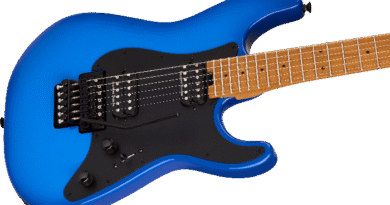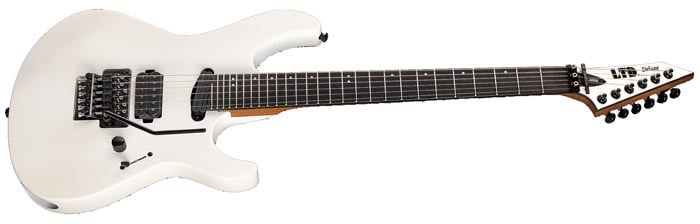
ESP LTD MV-1000 Maverick
A Modern Revival of an ESP Classic
Introduction
Some guitars quietly disappear from production and are eventually forgotten. Others leave enough of an impression that players spend years hoping they’ll return. The MV-1000 brings back one of ESP‘s most recognizable body designs while introducing a new generation of players to a guitar that has spent decades living just outside the spotlight.
The Maverick first appears during the late 1980s, when guitar manufacturers compete to build faster, lighter, and more technically capable instruments. Players want deeper cutaways, flatter fingerboards, locking tremolos, and necks that seem to disappear in the hand. It is also a period when ESP manufactures components for several major brands, including Kramer.
That relationship helps explain why the original Maverick shares so much of its DNA with the Kramer NightSwan. Both feature a 24.75 inch scale, Floyd Rose tremolo, maple neck, ebony fingerboard, and an uncompromising approach to upper fret access. Rather than copying the NightSwan outright, ESP develops its own interpretation, creating a body shape that remains unmistakably Maverick more than three decades later.
The Maverick Returns
The original ESP Maverick appears in vintage and custom runs from the late 1980s through the mid 1990s before quietly disappearing from the catalog. It becomes one of those guitars that longtime ESP enthusiasts remember fondly while newer players may never have encountered at all.
ESP officially revives the Maverick in 2026 through three different product lines. At the top sits the handcrafted ESP Original Series model at roughly $6,000, followed by the Japanese built E-II version at approximately $3,200. The MV-1000 joins the LTD Deluxe lineup as the most accessible Maverick ever produced.
The surprising part isn’t its price. It’s the fact that the LTD remains closer to the original Maverick than either of its Japanese counterparts.
Both the ESP Original Series and the E-II adopt the now familiar 25.5″ scale used by most modern superstrats. The MV-1000 keeps the original 24.75″ scale, preserving one of the defining characteristics that separated the Maverick from its contemporaries during the late 1980s.
That decision says quite a bit about what ESP wanted this guitar to be.
First Impressions
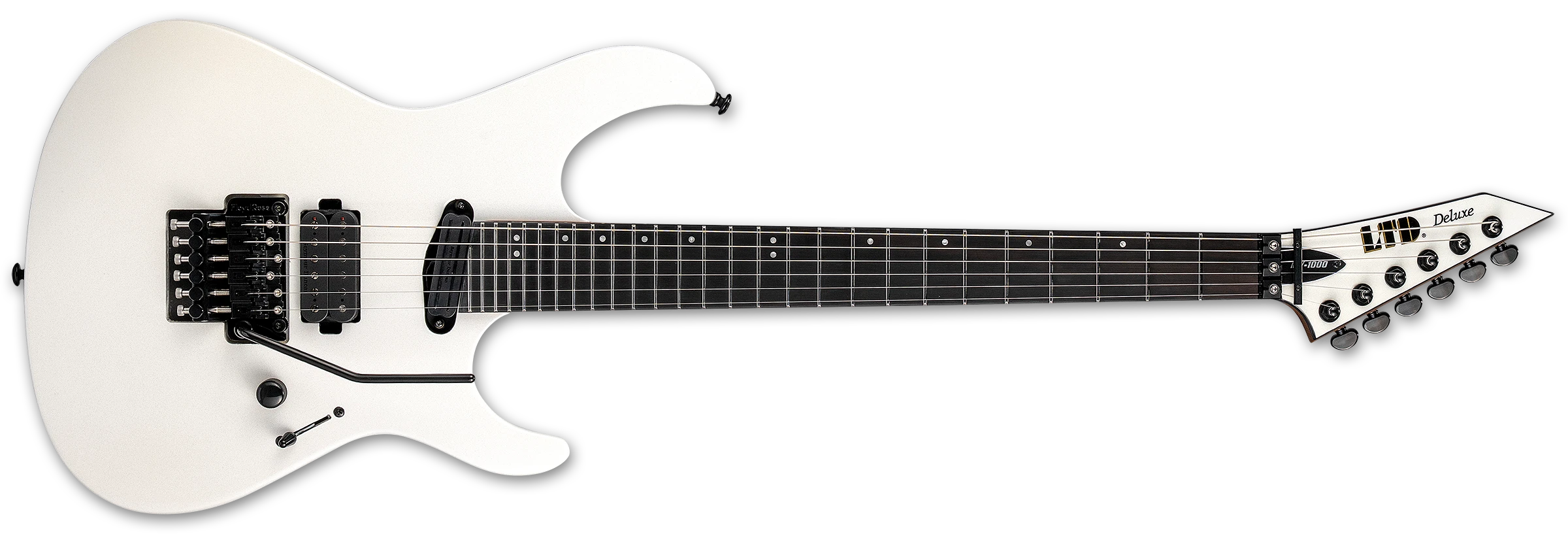
The Maverick doesn’t rely on elaborate finishes or exotic woods to stand apart from the crowd. Its body shape does that all by itself.
The elongated lower access immediately draws your attention, yet the overall design avoids the exaggerated points and sharp angles that define so many performance guitars from the shred era. Instead, the curves feel fluid and almost organic. Thirty years later, the Maverick still looks modern because it follows function more closely than fashion.
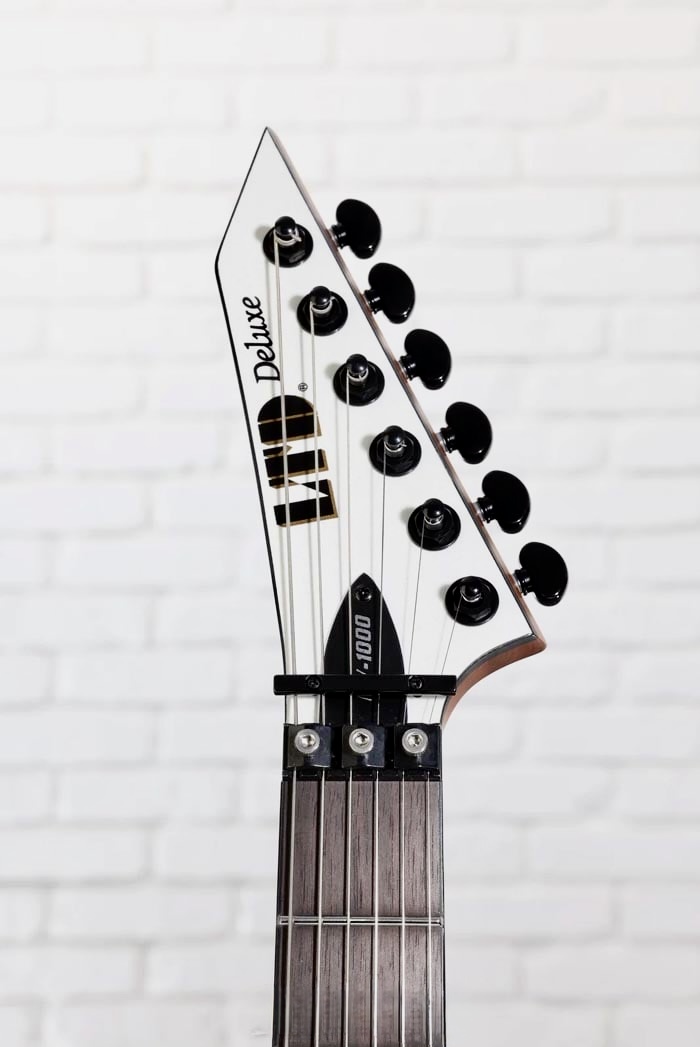
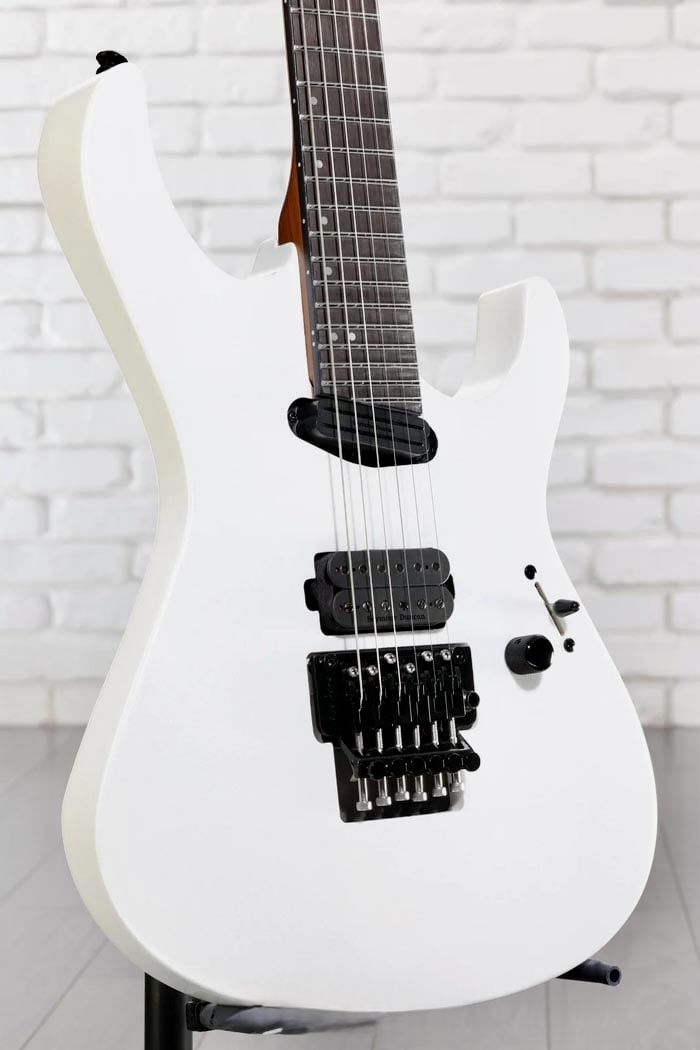
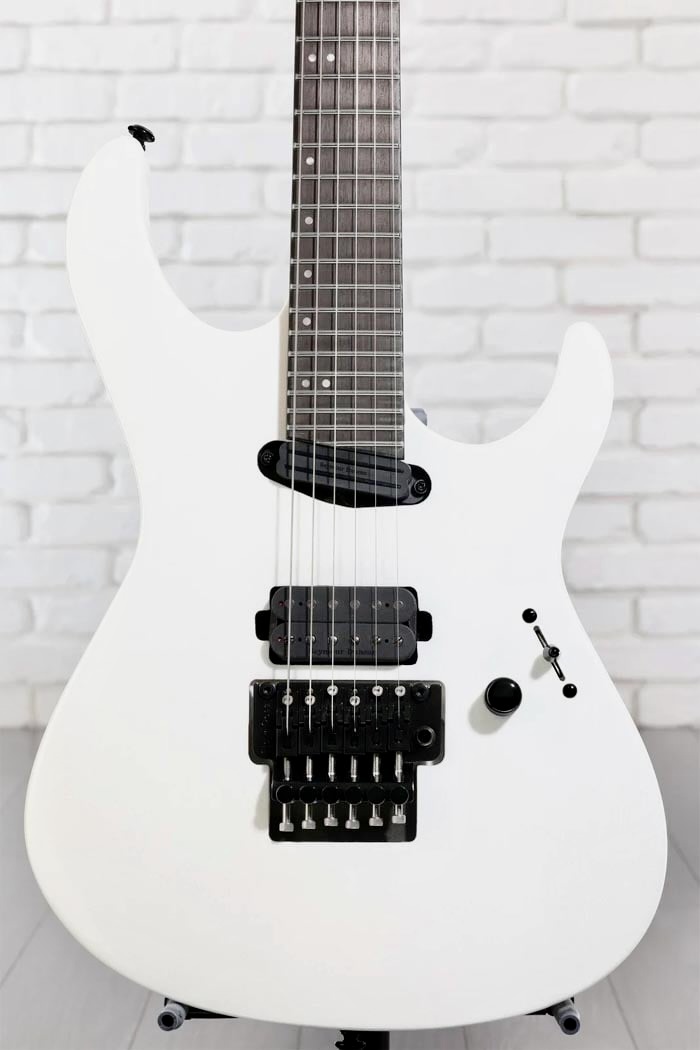
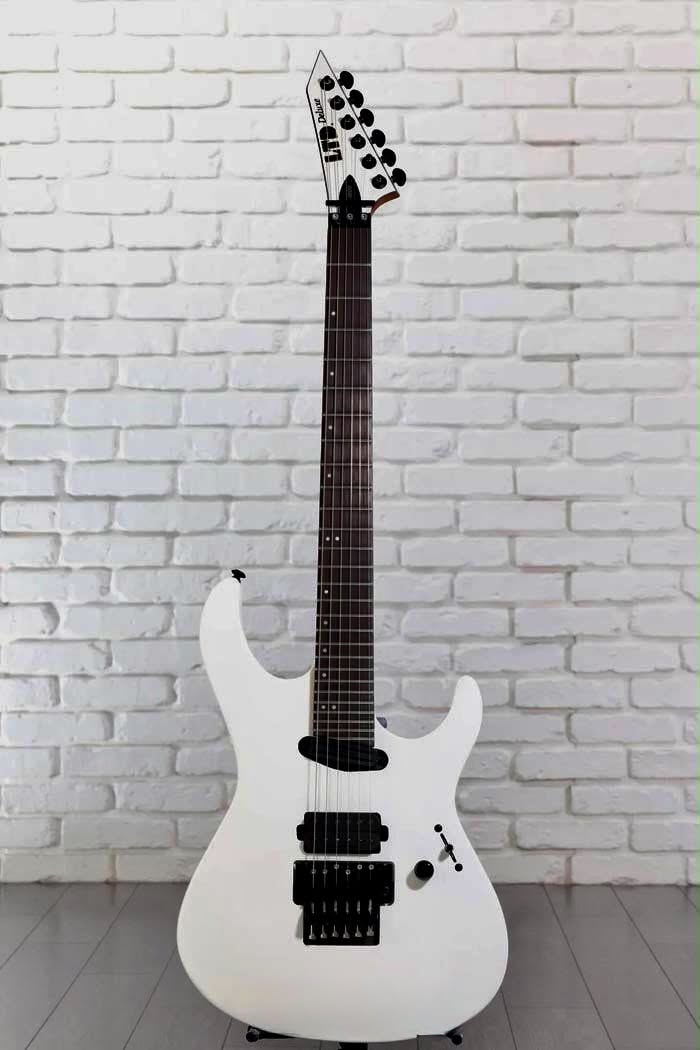
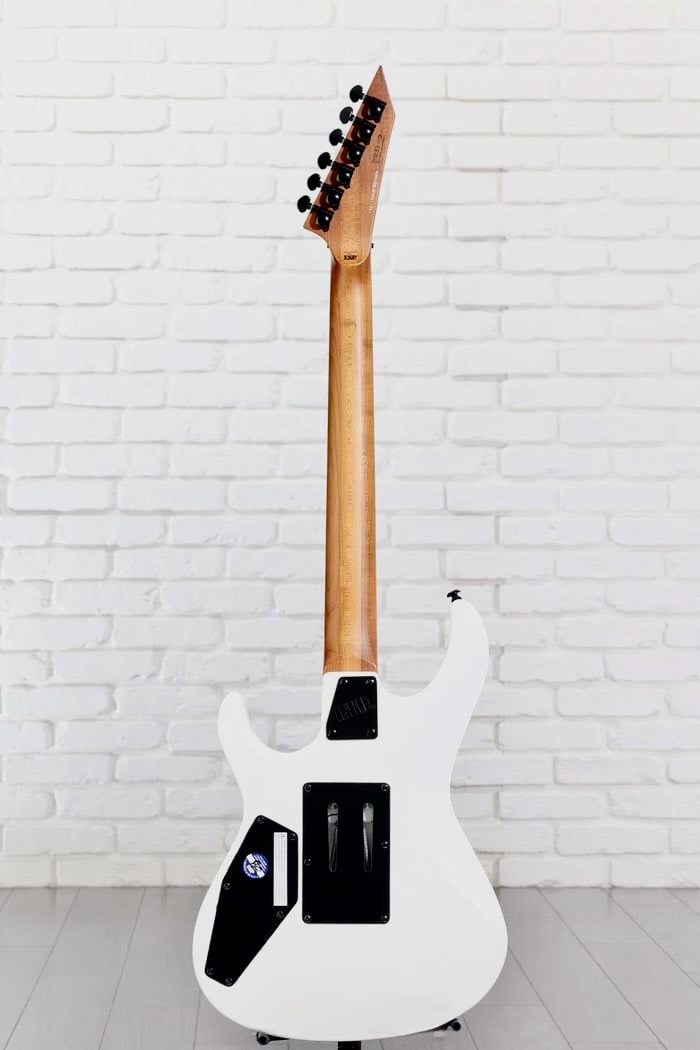
Pearl White proves to be an excellent choice for highlighting those lines. Without a figured maple veneer competing for attention, the body’s contours become the focal point. Black hardware provides enough contrast to frame the design, while the reverse matching headstock ties everything together without feeling overdone.
Many manufacturers chase visual impact through increasingly elaborate cosmetics. ESP simply lets the shape speak for itself.
Body
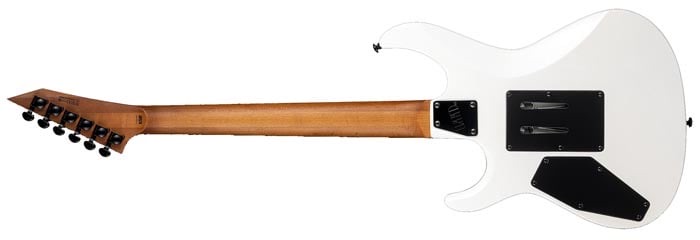
ESP builds the MV-1000 around an alder body and roasted maple bolt on neck, a combination that has earned its reputation through decades of real world use rather than marketing copy. Alder provides balanced mids, controlled bass response, and enough high end detail to remain articulate across a wide range of musical styles without overly coloring the guitar’s voice.
While neck through guitars often dominate conversations about premium performance instruments, a properly executed bolt on neck offers a lively attack while remaining easier to service throughout the instrument’s life. Considering the Maverick’s origins as a working musician’s guitar, the decision makes practical sense. Bolt on construction also fits the Maverick’s personality.
The generous body contours deserve just as much attention as the wood selection. The elongated lower access isn’t simply a styling exercise. It allows the neck joint to sit farther into the body, giving players unrestricted access to all 27 frets without dramatically increasing the instrument’s overall size.
Everything about the body feels intentional. Nothing feels decorative.
Scale Length
The most unusual specification on the MV-1000 isn’t something you immediately notice. It’s something you feel. Modern superstrats almost universally use Fender’s 25.5″ scale because it complements lower tunings, tighter string tension, and a brighter overall response. The Maverick has always done things differently.
By retaining the original 24.75″ scale, ESP gives the LTD a playing feel that immediately separates it from its Japanese siblings. Wide bends require less effort, vibrato feels more expressive, and legato passages flow naturally beneath the fingers without sacrificing tuning stability.
That shorter scale also reinforces the Maverick’s identity. Rather than becoming a less expensive version of the ESP Original Series or E-II, the MV-1000 stands as the most faithful interpretation of the original concept currently available.
Design Decision
Why Didn’t ESP Change the Scale?
One of the more interesting engineering decisions on the MV-1000 involves something ESP could have changed without anyone questioning it. The company didn’t.
When the Maverick returned as an ESP Original Series and E-II model, both adopted the industry standard 25.5″ scale. The LTD instead preserves the shorter scale found on the original Maverick. It’s an unusual decision because manufacturers typically standardize specifications as products move through different price points.
Here, the opposite happens. The most affordable Maverick carries forward one of the original model’s defining characteristics, giving the MV-1000 a personality that extends well beyond its price tag.
Electronics
ESP could have equipped the MV-1000 with any number of familiar pickup. Instead, they went in another direction.
An ESP-exclusive humbucker occupies the bridge position. While ESP doesn’t publish detailed specifications for this pickup, its voice sits comfortably between vintage restraint and modern aggression. There’s enough output to push today’s high-gain amplifiers without sacrificing note definition, allowing complex chords and fast alternate-picked passages to retain their clarity.
Pulling up on the master volume splits the bridge pickup, extending the guitar’s usefulness well beyond hard rock and metal. It isn’t intended to replace a traditional single coil, but it does add another layer of versatility without complicating the control layout.
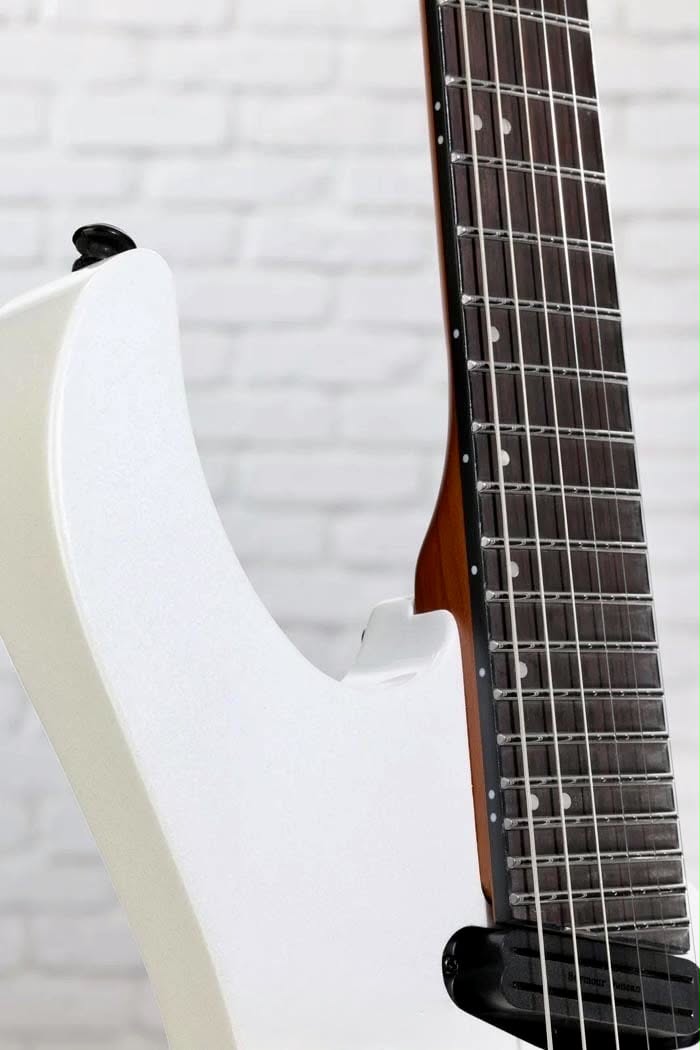
The neck position may be the more interesting choice. Instead of reaching for one of a more traditional neck humbuckers, ESP installs a rail-type hum-canceling single-width pickup. That decision makes considerably more sense when viewed alongside the guitar’s 27-fret neck, where pickup placement becomes just as important as pickup selection.
Hardware
The overall hardware package avoids unnecessary gimmicks. Every component serves a practical purpose, reinforcing the idea that the MV-1000 is designed as a professional instrument first and a display piece second. The MV-1000 is clearly intended to be played rather than admired from across the room.
Its Floyd Rose 1000SE double locking tremolo offers exactly what players expect from a modern performance instrument. Dive bombs, pull-ups, flutter effects, and wide vibrato all remain on the menu while the locking nut helps preserve tuning stability through aggressive use.
Grover tuners complete the system. Although the locking nut handles most of the tuning security once the guitar is clamped down, quality machine heads still contribute to smooth tuning adjustments and dependable long-term operation.
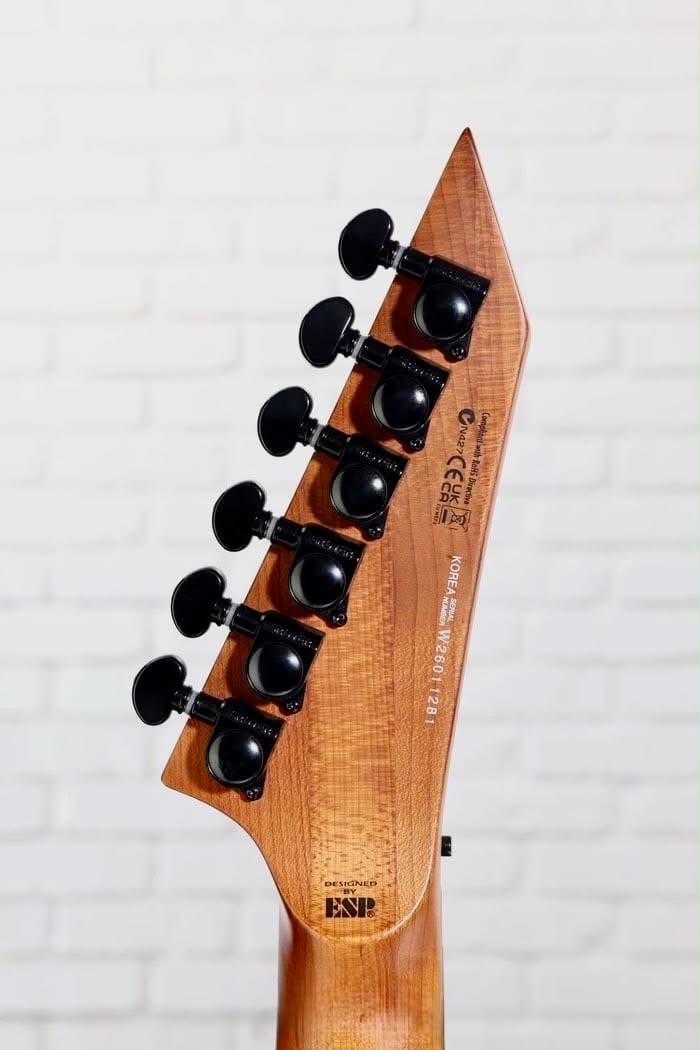
Floyd Rose 1000SE
One specification deserves a closer look.
Unlike the standard Floyd Rose 1000 Series, the 1000SE replaces several of the traditional black oxide alloy steel screws with stainless steel hardware. The change immediately catches your eye against the otherwise black bridge, and stainless steel certainly offers improved corrosion resistance for players whose perspiration tends to be particularly acidic.
The tradeoff is less obvious.
Although stainless steel excels at resisting corrosion, it generally doesn’t match the tensile strength of the alloy steel fasteners traditionally used throughout Floyd Rose hardware. For most players, that difference will never matter. Anyone who regularly services their own tremolo, however, should simply be mindful not to over-tighten components during maintenance.
The bridge itself remains every bit as functional as the standard Floyd Rose 1000. The stainless hardware simply reflects a different balance between corrosion resistance and ultimate fastener strength. Whether that balance is worthwhile depends largely on the individual player.
Neck
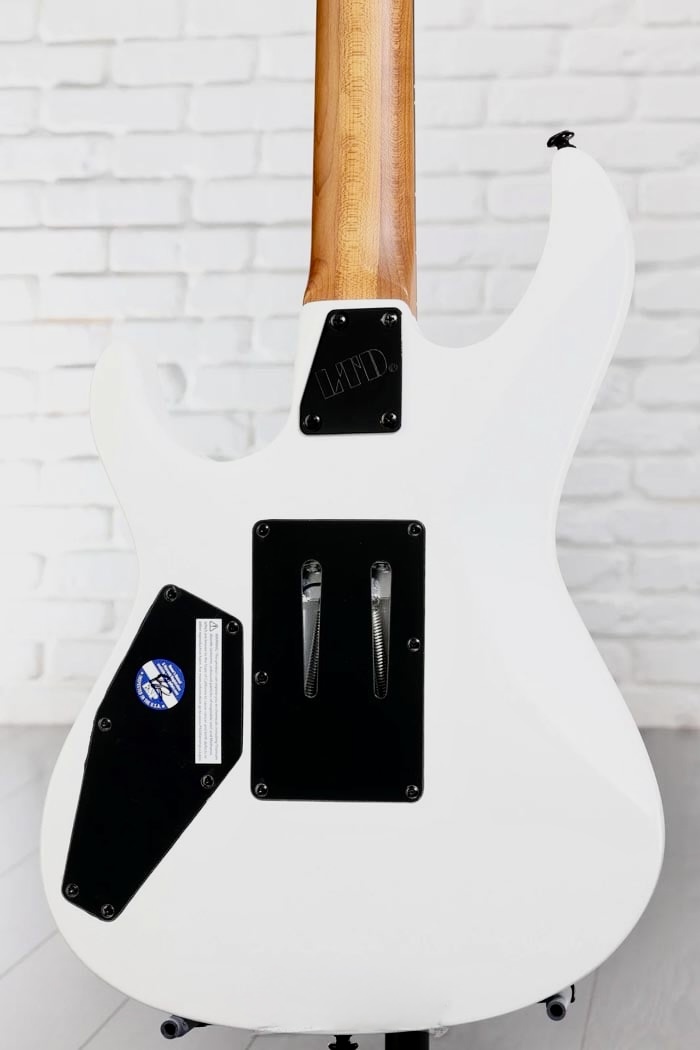
Roasted maple has become increasingly common on premium guitars, but the process offers benefits that extend beyond appearance.
Heating the wood in a controlled environment removes moisture and volatile compounds while improving dimensional stability. The result is a neck that tends to react less dramatically to seasonal humidity changes, an advantage that touring musicians and players living in variable climates quickly learn to appreciate.
ESP shapes the neck into its familiar Extra Thin U profile, creating a comfortable balance between speed and substance. Some ultra-thin necks begin to feel almost fragile after extended playing sessions. This one maintains enough shoulder to remain comfortable without slowing your hands down.
The generous lower access and sculpted neck joint complement that profile perfectly. Reaching the highest frets feels surprisingly natural, which is exactly how it should be on a guitar designed around lead playing.
Frets
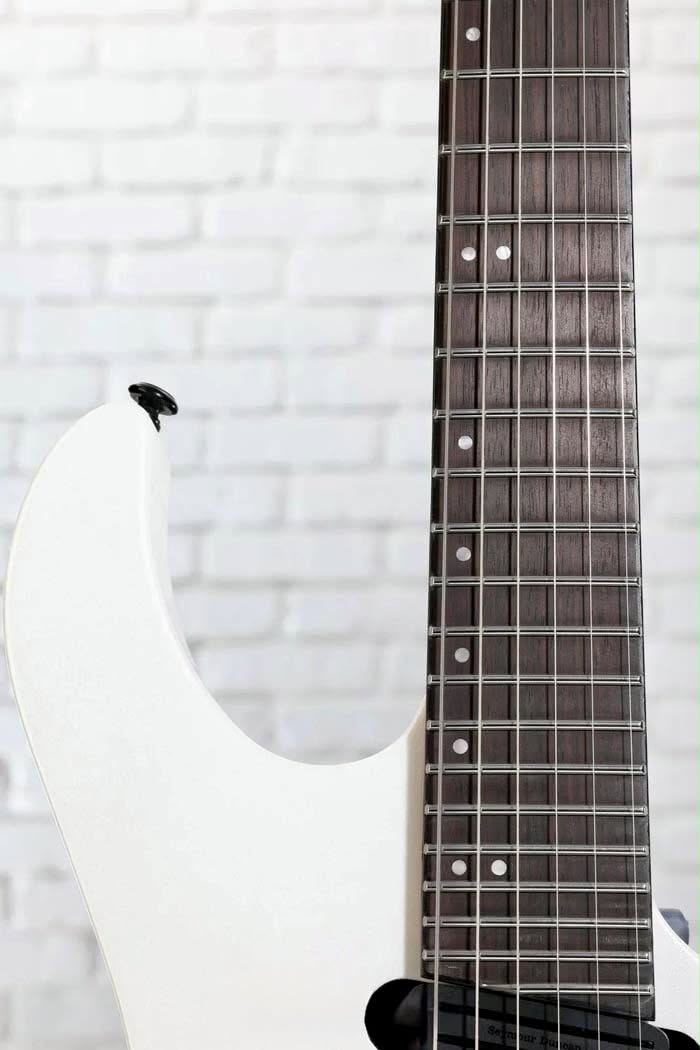
Twenty-seven frets still feel unusual, even in today’s performance guitar market. Most players rarely need notes beyond the 24th fret, but that’s only part of the story. The additional three frets extend the guitar’s range while subtly changing the instrument’s overall geometry. That, in turn, influences neck pickup placement, string vibration, and ultimately the guitar’s voice.
ESP specifies extra jumbo stainless steel frets throughout the fingerboard. Players who have never owned a stainless-equipped guitar often notice two things almost immediately. String bends feel exceptionally smooth, and fret wear becomes almost nonexistent under normal playing conditions. While traditional nickel silver frets eventually require dressing or replacement, stainless steel can remain virtually unchanged for years of regular use.
For players who spend their weekends performing rather than maintaining guitars, that’s a meaningful advantage. Like so many of the MV-1000’s specifications, the frets reflect long-term practicality rather than marketing appeal.
Specs
| Specification | Details |
|---|---|
| Construction | Bolt On |
| Scale | 24.75″ |
| Body | Alder |
| Neck | 3 Piece Roasted Maple |
| Neck Profile | Extra Thin U |
| Fingerboard | Macassar Ebony |
| Radius | 350 mm (13.8″) |
| Frets | 27 XJ Stainless Steel |
| Nut | Locking, 42 mm |
| Bridge | Floyd Rose 1000SE |
| Tuners | Grover |
| Bridge Pickup | Seymour Duncan Custom 14 TB |
| Neck Pickup | Seymour Duncan Hot Rails |
| Controls | Master Vol w/ P-P Coil Split, 3-Way Toggle |
| Finish | Pearl White |
Demo
ESP Presents 2026, feat the MV-1000 at the 13:06 mark
Areas of Opportunity
The MV-1000 arrives with a thoughtfully assembled specification sheet, making it difficult to identify genuine shortcomings. Most of what I’d change falls into the category of refinement rather than correction.
The Floyd Rose 1000SE is a good example. Its stainless steel fasteners certainly resist corrosion better than the traditional black oxide alloy hardware found on the standard Floyd Rose 1000 Series. Players with particularly acidic perspiration may appreciate that choice over the long term. From an engineering standpoint, however, stainless steel generally gives up some tensile strength in exchange for corrosion resistance. The difference is unlikely to affect day-to-day playing, but anyone who performs their own maintenance should simply remember that stainless fasteners don’t tolerate over-tightening quite as well as their alloy steel counterparts.
Personally, I think ESP should specify the traditional black oxide hardware.
Not because the stainless screws perform poorly, but because I’d gladly trade a little corrosion resistance for the additional strength of the conventional hardware. Besides, if visual appeal was part of the motivation, I’d rather see the Maverick offered in additional finishes than rely on a few bright screw heads to catch the eye. This body shape deserves more than a single color option.
Locking strap buttons would also make a welcome addition. A guitar clearly intended for stage use shouldn’t require an immediate hardware upgrade before the first rehearsal. Luminlay side markers are another feature I’d happily accept, particularly for players working under less-than-ideal stage lighting.
None of these observations changes the overall character of the instrument. They’re simply the sort of refinements I’d suggest if ESP ever asks for a second-generation MV-1000.
Conclusion
Every generation produces a handful of guitars that refuse to fit neatly into established categories. The Maverick has always been one of them.
It borrows ideas from the superstrat movement without becoming just another Strat-style guitar. It embraces modern performance while holding onto a shorter scale length more commonly associated with Gibson designs. Even after three decades, the body shape still manages to look distinctive without feeling dated. The MV-1000 continues that tradition remarkably well.
Rather than treating the Maverick as a nostalgic reissue, ESP updates it with roasted maple, stainless steel frets, dependable hardware, and a carefully considered Seymour Duncan pickup combination. More importantly, the company resists the temptation to erase the guitar’s identity in pursuit of modern convention. That decision deserves recognition.
Players looking for another high-output superstrat have no shortage of excellent choices. Charvel, Jackson, Ibanez, Schecter, and ESP itself all offer compelling alternatives. The MV-1000 appeals to a different player.
It’s for someone who appreciates guitar history, values thoughtful engineering, and wants an instrument that stands apart without resorting to gimmicks. The Maverick has never been the obvious choice. That’s exactly what makes it interesting.
ESP Guitars Website | Facebook | Twitter | YouTube | Instagram
7 string 59 Airbucker Alnico 2 Alnico 3 Alnico 4 Alnico 5 Alnico 8 Bare Knuckle BKP Brown Sound Celestion Ceramic Charvel Custom Shop David Shepherd DiMarzio Dual Resonance Edge EVH Fishman Floyd Rose Gibson HSP90 Humbucker Ibanez JB Jimmy Page John Petrucci MJ Mojotone P90 PAF Pariah Pickup Satch Satriani Seymour Duncan Singlecoil Single Width Speaker Steve Vai Tech Tip Tremolo Virtual Vintage