DiMarzio Satch Track
Header photo by Larry DiMarzio
Introduction / History
The neck pickup is where many shred guitars quietly surrender. Bridge pickups get all the glory. They get the magazine ads, the signature endorsements, and the YouTube demos. Meanwhile, the neck pickup is expected to handle everything from glassy cleans to singing lead tones without turning into a muddy mess.
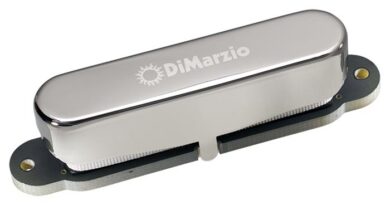
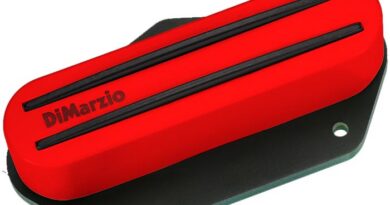
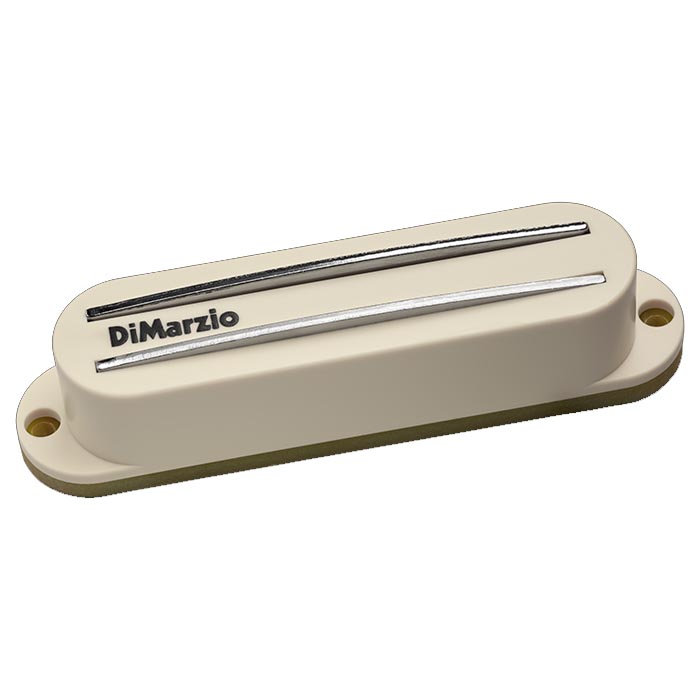
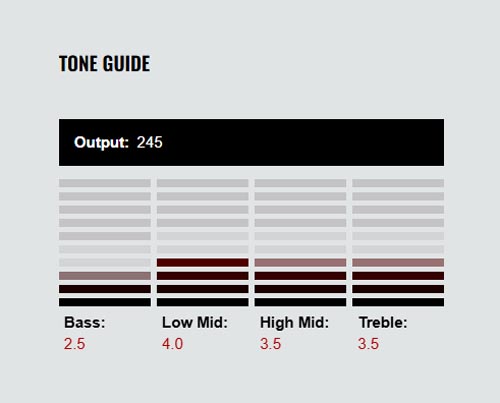
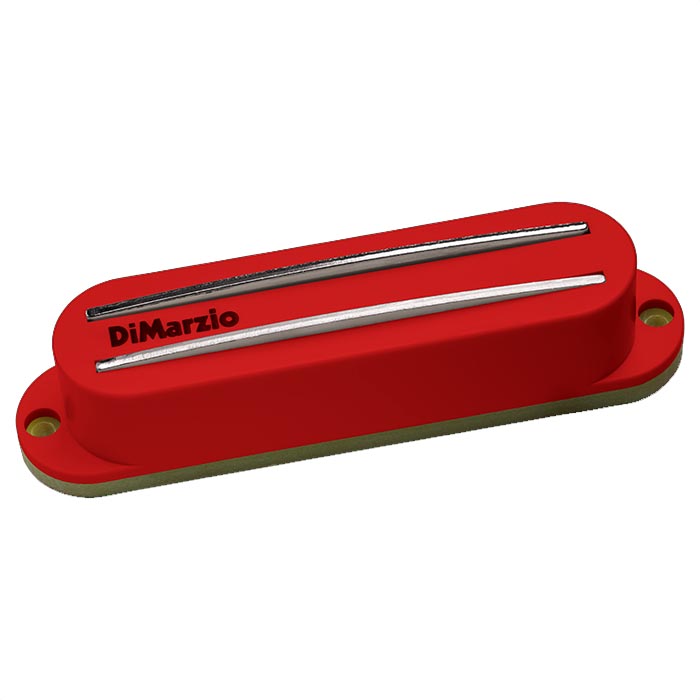
Then there is the Satch Track. Designed for Joe Satriani after years of refining his evolving guitar tone, the Satch Track is the first single coil sized signature pickup to bear his name. Unlike many rail style pickups that simply chase more output, the Satch Track pursues articulation first. Its ceramic magnet and moderate 245mV output place it well below many modern high gain designs, allowing it to retain clarity while still offering enough authority to stand alongside full size humbuckers.
Installed in the neck position of my Ibanez 540PIII with a Mo’ Joe in the bridge, the Satch Track enters an environment filled with harmonic richness, fast playing, and enough gain to make lesser pickups beg for mercy.
The question is simple: Can a rail pickup really deliver both humbucker muscle and single coil responsiveness? Time to find out.
Dual Resonance
Satch Track uses DiMarzio Dual Resonance design, which changes the way the coils interact with each other.
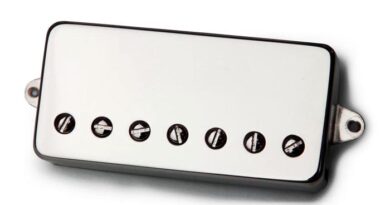
Dual Resonance is basically mis-matched coils. It’s common for several pickup companies to allow about a 5% variance. But Dual Resonance is an intentional mis-matching of the coils to produce a specific “tuning” of the pickup’s voice. According to the patent, it is pretty much about putting a similar number of turns on each coil. But with different wire gauges.
In the image below, you will see that the left bobbin has a skinnier wind than the right bobbin. Yet both bobbins have a similar number of turns. It is the wire gauge that is different. with the left having a smaller gauge and the right having a larger. And while this image is a full-size humbucker, yes, DiMarzio can apply the same tech to their Rail Hum Canceling Strat pickups.

Installation
I install the Satch Track into the neck position of my Ibanez 540PIII, paired with a DiMarzio Mo’ Joe in the bridge. Physically, installation is completely straightforward. The pickup drops into a standard Strat sized route and uses DiMarzio’s familiar four conductor wiring scheme.
One immediate advantage of the dual rail design becomes obvious during setup. String alignment simply does not matter. Unlike traditional pole pieces that can occasionally create balance concerns on guitars with unusual spacing, the continuous blade design keeps output remarkably even across all six strings.
Pickup height proves surprisingly important. Too close to the strings and the Satch Track begins to lose some of its openness. Lowering it slightly allows the note separation and vocal character to emerge. This is not a pickup that rewards brute force adjustment. It prefers finesse.
Matching with the Mo’ Joe is easier than expected. On paper the Mo’ Joe carries significantly more output, but the Satch Track’s focused frequency response prevents it from sounding weak or overwhelmed when switching positions. Instead, the pair feels intentionally voiced as complementary partners.
By the time the solder cools and the first chord rings out, it becomes clear this is not merely a shrunk down humbucker. Something more interesting is happening here.
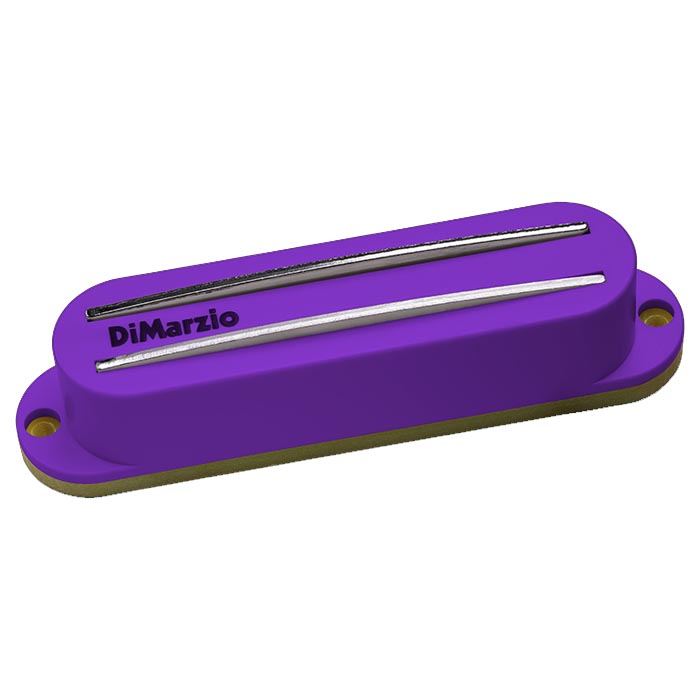
Evaluation
Single Coil Speed Without Single Coil Drama
The first thing I notice is how quickly the Satch Track reacts.
Fast alternate picked lines have an immediacy that feels much closer to a traditional single coil than a conventional neck humbucker. Pick attack jumps forward without excessive compression, making intricate legato passages and articulate phrasing feel effortless.
The notes simply arrive faster. That characteristic aligns perfectly with DiMarzio’s stated goal of preserving the tracking characteristics of a single coil while expanding the overall voice.
Warmth Without Mud
Many neck pickups make a terrible bargain by offering warmth in exchange for clarity. The Satch Track refuses the deal.
Bass response remains remarkably tight. Low strings retain definition under gain, while the midrange carries a smooth vocal quality that feels distinctly Satriani inspired. Chords remain intelligible even with substantial distortion, and complex voicings avoid collapsing into a congested blur.
Compared to the PAF Joe, the Satch Track sounds more focused and immediate. To the Mo’ Joe, it is leaner and more controlled. And to a traditional Strat neck pickup, it sounds larger and more authoritative.
The Secret Weapon: Lead Tones
This is where the pickup earns its signature status.
Sustained lead lines develop a singing quality that sits between a vintage neck humbucker and a high quality single coil. Harmonics emerge naturally, yet the top end remains smooth enough to avoid becoming shrill.
The word that keeps coming to mind is vocal. Notes do not merely sustain, but they speak.
Fast runs remain articulate, bends bloom smoothly, and expressive vibrato translates beautifully through the amp. This is a pickup that encourages phrasing.
What It Is Not
Players expecting a miniature Tone Zone or a tiny Super Distortion will likely be disappointed.
The Satch Track is not designed to overwhelm the front end of an amplifier. It is also not trying to impersonate a vintage Strat pickup.
Instead, it occupies a unique middle ground where articulation, warmth, and noise free operation coexist remarkably well. That balancing act is precisely what makes it special.
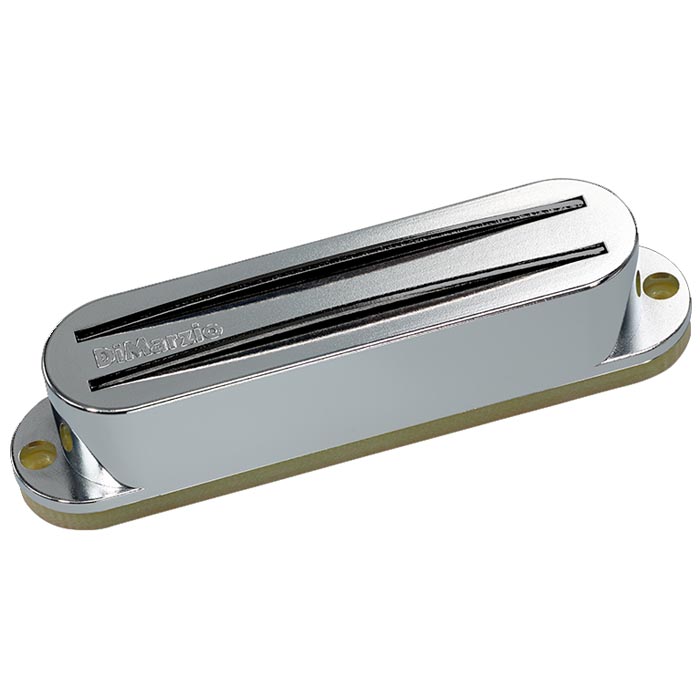
Specs
Series – 7.252 K
Inductance – 2.166 H
Split – 3.574 K
Split – 3.672 K
Parallel – 1.8109 K
Output – 245 mV
Magnet – Ceramic
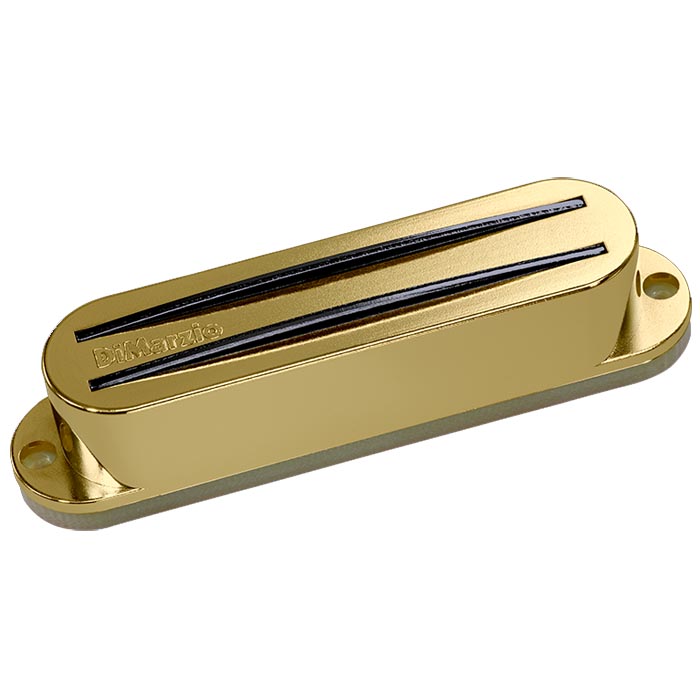
Demo
Conclusion
The Satch Track solves a problem that many neck pickups never even acknowledge. It delivers the speed, responsiveness, and articulation that players love about great single coils while preserving the fullness, warmth, and hum canceling performance expected from a humbucker.
Installed in my Ibanez 540PIII alongside a Mo’ Joe, the pairing feels exceptionally well matched. The bridge position provides aggression and harmonic authority, while the Satch Track supplies clarity, expression, and a surprisingly vocal lead voice.
The result is a guitar capable of covering everything from crystalline cleans to soaring instrumental rock leads without compromise. The Satch Track may not be the most famous Joe Satriani signature pickup. It might just be the most underrated.
For reference, this DiMarzio Satch Track pickup evaluation was conducted with the following: Fractal Axe-Fx II XL+ featuring Celestion Impluse Responses and Fractal MFC-101 MIDI Foot Controller. ADA MP-1 Tube Pre-Amp loaded with Tube Amp Doctor ECC83 Premium Selected tubes, using the ADA MC-1 MIDI Controller. Fryette LX II Stereo Tube Power Amplifier. Physical cabs use are Marshall 1960B, Mojotone British, and Peavey 6505 cabs loaded with Celestion Classic Series Vintage 30s and Classic Series G12M Greenbacks.
DiMarzio Website | Facebook | Twitter | YouTube | Instagram
7 string 59 Airbucker Alnico 2 Alnico 4 Alnico 5 Alnico 8 Artist Signature Bare Knuckle BKP Brown Sound Celestion Ceramic Charvel Custom Shop David Shepherd DiMarzio Dual Resonance Edge EVH Fishman Floyd Rose Gibson HSP90 Humbucker Ibanez JB Jimmy Page John Petrucci MJ Mojotone P90 PAF Pariah Pickup Rail Satch Seymour Duncan Singlecoil Single Width Speaker Steve Vai Tech Tip Tremolo Virtual Vintage