Bumps In The Road: Fixing A Fingerboard
Welcome Back To The Crime Scene
In a previous Tech Tips article, “Grading On A Curve: A Look At Fingerboard Radius,” the microscope lands squarely on a problematic fingerboard that somehow sneaks its way into the world wearing boutique clothing. Underneath the shiny finish and marketing fluff lives a collection of geometry issues that read like a luthier horror anthology. Loose fret slots allow frets to rise out of the board. The lower register develops a noticeable hump around the third to fifth fret area. Another rise appears farther north around the fourteenth fret. The compound radius shifts inconsistently from one section of the fingerboard to the next like somebody freehands the entire thing during a caffeine shortage.
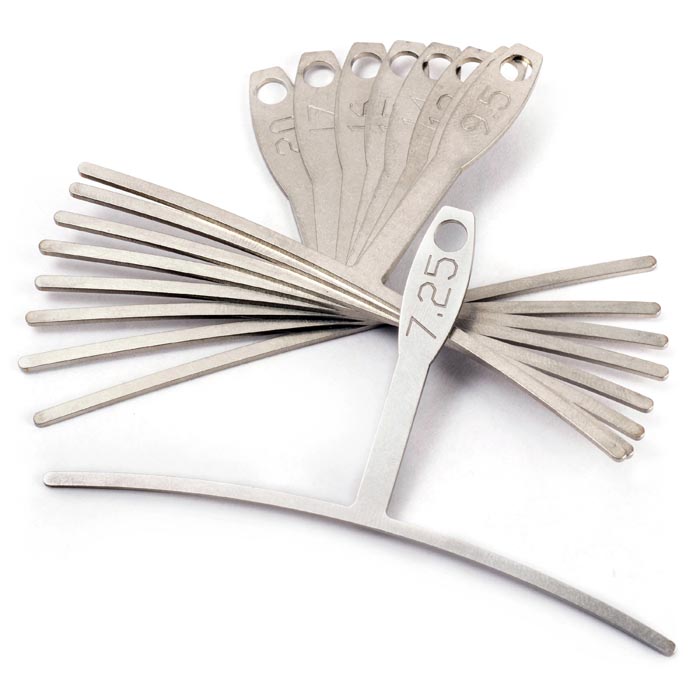
At first glance, the guitar merely feels a little “off.” Action fights back. Certain bends choke unexpectedly. Notes bloom differently depending on where they sit on the neck. The setup window becomes incredibly narrow. But once precision measuring tools enter the conversation, the real picture starts coming into focus. Radius gauges tell one story. Straightedges tell another. Fret rockers start screaming in binary.
This is one of those moments where the illusion of premium craftsmanship evaporates the instant hard geometry enters the room.
The frustrating reality with fingerboard problems is that they rarely travel alone. A hump in one location often creates the illusion of a dip somewhere else. One inconsistent radius transition affects neighboring frets. Tiny variations in surface grading become amplified once string tension, fret height, neck relief, and bridge radius begin interacting together. Geometry problems compound exponentially inside a guitar neck because every element of the system references every other element.
And that is exactly where this fingerboard decides to become interesting.
Replace It Or Rescue It?
At this stage, the obvious suggestion is replacing the neck entirely. Honestly, that recommendation makes perfect sense. By the time a fingerboard develops inconsistent compound radius transitions, loose fret slots, localized humps, and questionable falloff, most sane people start browsing replacement neck catalogs like they are shopping for emergency medical supplies.
Another option involves removing the fingerboard completely and installing a new one. That route carries its own level of chaos. Heat application. Glue separation. Surface prep. Clamping pressure. Radius shaping. Refretting. Finish work. Suddenly a repair job transforms into a full-blown reconstruction project with enough opportunities for disaster to fill an entire season of reality television.
But there is another side to this discussion that matters just as much. Sometimes a problematic fingerboard becomes the perfect laboratory.
One of the great lies in modern guitar culture is the idea that every instrument needs to remain pristine and untouched. Meanwhile, some of the best learning experiences come directly from wrestling with imperfect guitars. A difficult repair forces an understanding of geometry in a way that spec sheets and YouTube videos never accomplish. Once material starts coming off the fingerboard under a leveling beam, theory suddenly becomes very real.
So instead of replacing the neck, the decision lands on re-radiusing the fingerboard itself. Partly because it makes financial sense and partly because the neck still shows potential underneath the chaos. But mostly because this sort of project teaches lessons the easy route never reveals.
Naturally, this also means stepping directly into the deep end of compound radius correction. Because apparently simple life choices remain illegal around here.
The Roller Coaster Effect
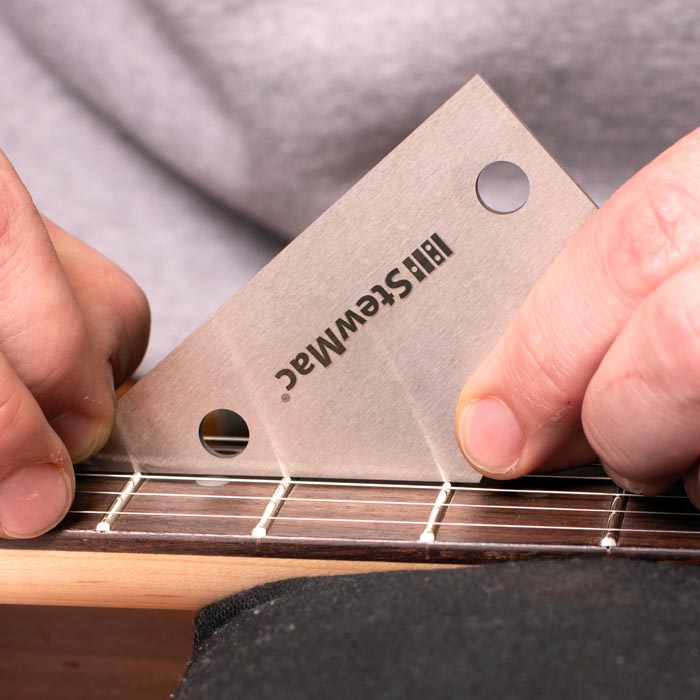
The first major discovery arrives shortly after leveling work begins. The humps are not isolated.
That is where fingerboard geometry starts behaving like a cruel magic trick. Most players imagine a hump as a single raised section. In reality, high spots often create neighboring low spots that become visible only after material removal begins. The leveling beam starts exposing a surface that behaves less like a smooth transition and more like a miniature roller coaster carved into ebony.
This is the dangerous part of uneven fingerboard grading. The visible problem is rarely the entire problem.
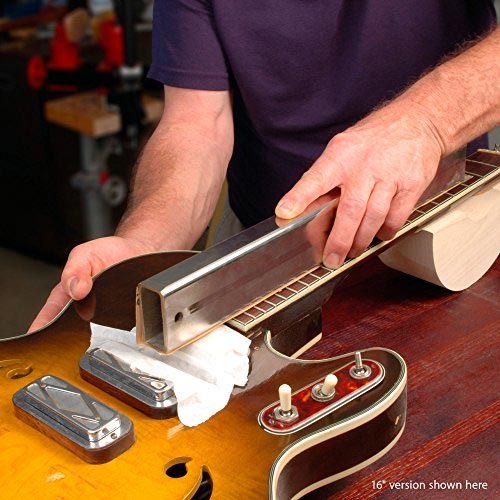
Once a leveling beam rides across the board, the contact pattern immediately reveals inconsistencies hiding between the obvious trouble areas. Material disappears from one section while neighboring areas remain untouched. Certain frets start cleaning up immediately while others barely make contact. Suddenly the repair stops being “remove hump, install frets, move on with life” and becomes a careful balancing act between preserving geometry and correcting instability.
Compound radius fingerboards make this even more sensitive because the curvature changes continuously along the playing surface. A traditional fixed radius board behaves relatively predictably during leveling. A compound fingerboard demands constant awareness of how one section transitions into the next. Remove too much material from the wrong area and the entire progression starts losing consistency.
The Ones That Slip Through
This is also the moment where embarrassment quietly enters the chat. Because yes, this guitar slips through inspection before purchase. Not exactly a proud moment.
Still, the silver lining appears later after hearing similar stories from other owners coming out of the same shop. Multiple instruments show comparable issues. Uneven fingerboard grading. Strange fret inconsistencies. Setup instability. Even a bass enters the conversation carrying similar symptoms.
Turns out the fingerboard apocalypse is not exclusive to this particular guitar. Comforting, in a deeply irritating sort of way.
The Science Of The Transition
With the fingerboard now partially leveled, attention turns toward correcting the radius itself.
The original shape lands slightly too shallow in the lower register for the intended setup goals, so the decision settles on a 12-inch radius at the first fret. That choice is not random. A tighter radius near the nut tends to feel more natural during chord work because the curvature better matches the natural arc of the fretting hand. As the neck progresses upward, a flatter surface allows wider bends with less chance of fretting out.
That balancing act is the entire philosophy behind compound radius fingerboards.
Vintage-style rounder radii feel fantastic for first-position playing but can struggle under aggressive bending with modern low-action setups. Flatter fingerboards excel at lead work and high-speed playing but sometimes lose that naturally curved feel players associate with older instruments. A properly executed compound radius attempts to bridge both worlds by gradually flattening the geometry as the player moves higher up the neck.
When executed correctly, the transition feels invisible. When executed poorly, the neck feels like multiple different guitars welded together.
That is why maintaining consistency during a re-radius process matters so much. The goal is not simply flattening high spots. The goal is creating a smooth mathematical progression across the entire playing surface. Every pass of the leveling beam influences how the strings interact with fret height, bending trajectory, and overall action stability.
This is also where many players underestimate just how interconnected guitar geometry becomes. Fingerboard radius affects bridge setup. Bridge setup affects saddle height. Saddle height influences string excursion during bends. Neck relief changes the effective feel of the radius itself. Everything talks to everything else.
The guitar is basically a highly emotional ecosystem built out of wood, metal, tension, and bad decisions.
Fingerboard Fallaway Or Just Sloppy?
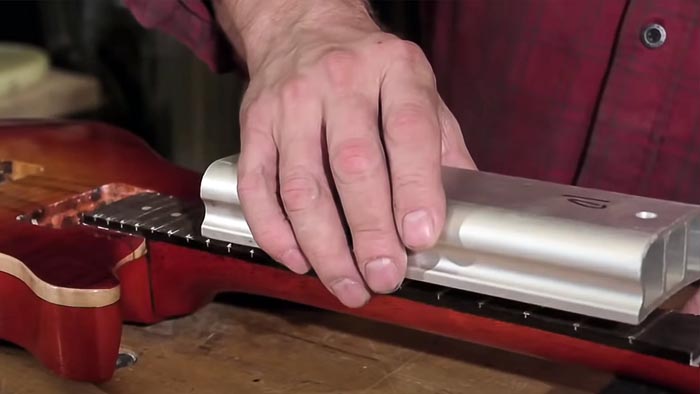
As the leveling process continues, another interesting detail emerges along the edges of the fingerboard. There is noticeable falloff near both ends.
Now, intentional upper fret fallaway is actually a useful thing. Many high-performance setups deliberately introduce a slight drop in the upper register to prevent notes from choking during aggressive bends. A subtle “waterfall” effect beyond the main fret plane allows lower action without creating interference farther up the neck. In the hands of a skilled builder, this becomes part of the secret sauce behind a guitar that somehow feels effortless.
But there is a fine line between intentional fallaway and uncontrolled fingerboard inconsistency. Near the upper frets, a little extra drop can work beautifully. Near the first fret, not so much.
That lower-register falloff creates instability where precision matters most. Nut height becomes harder to optimize. Open-position intonation feels inconsistent. The playing surface starts behaving unpredictably before the guitar even reaches the middle of the neck.
At this point, suspicion starts growing that the original fingerboard blank never receives proper surfacing before radius shaping begins. Almost as if the board enters production already carrying uneven geometry before anybody starts cutting fret slots. Which honestly explains a lot.
A fingerboard is only as accurate as the surface underneath it. Once inconsistencies become baked into the foundation, every stage afterward simply inherits the problem. Fretting does not fix bad geometry. Setup does not fix bad geometry. Fancy pickups definitely do not fix bad geometry. The fingerboard always tells the truth eventually.
Stainless Steel Surgery
Once the fingerboard reaches a stable and consistent shape, attention shifts toward fret slot depth and fret installation. Any major leveling or re-radius process raises an important question. Are the fret slots still deep enough? Thankfully, everything checks out.
This time, however, the fret slots receive glue before installation because there is no interest in reliving the “frets trying to escape the fingerboard” experience from earlier. Proper fret seating matters tremendously for long-term stability. Even tiny inconsistencies in slot compression can create future movement as humidity, temperature, and string tension continue fighting each other over time.
For fret wire, the choice lands on Jescar stainless steel jumbo wire. Cue the dramatic music. LOL!
There is always somebody ready to clutch pearls the instant stainless steel frets enter the conversation, usually followed by a sermon about “traditional feel” delivered by somebody whose nickel frets already resemble melted candle wax after six months.
Meanwhile, stainless steel offers incredible durability, smoother bending, longer fret life, and surprisingly reasonable pricing. In this case, the cost difference barely moves beyond a few extra dollars compared to traditional nickel-silver wire. Considering the amount of labor involved in fretwork, cheaping out on fret material feels like putting bargain tires on a race car.
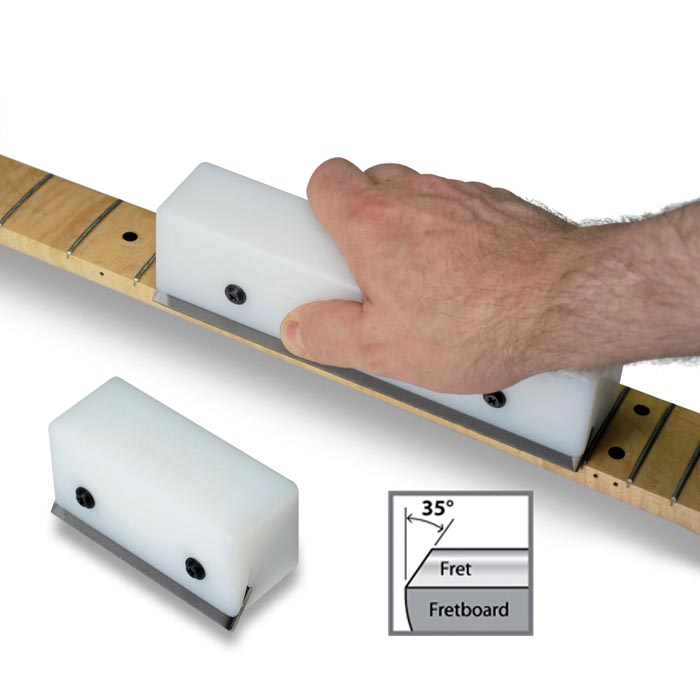
After allowing the glue adequate drying time, the frets receive leveling, beveling, crowning, and polishing. This is where the guitar finally starts transforming from wounded project into functioning instrument.
Leveling establishes consistency. Crowning restores precise contact points. Polishing removes friction and improves feel. Every stage builds on the previous one. Skip or rush any part of the process and the entire fingerboard reminds you of your mistake immediately. Guitars are wonderfully unforgiving like that.
Straightening Out The Relationship
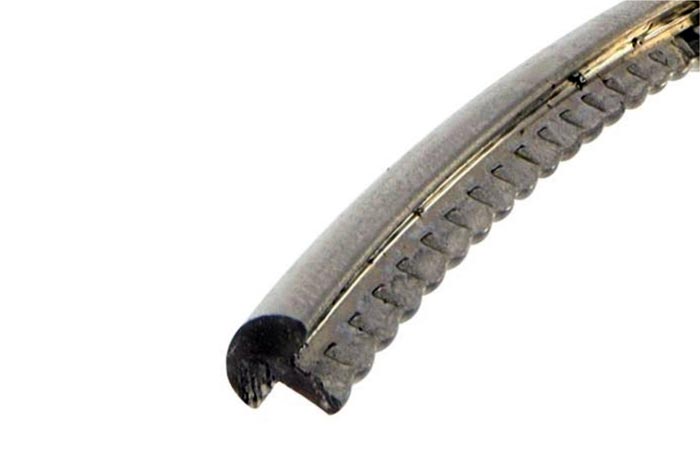
With the fingerboard repaired and fretted, another lingering annoyance finally gets addressed during reassembly. The strings never properly center along the neck.
This sort of thing becomes a massive pet peeve once you notice it. Suddenly every slightly crooked string path starts glowing like a neon sign. Some players ignore it forever. Others lose sleep over it. Naturally, this guitar lands directly in the second category.
What makes it particularly irritating is the expectation level attached to a supposedly boutique-style instrument. At that price point, basic neck alignment should not feel like an optional DLC package.
While the neck remains off the body, the screw holes get drilled and plugged with hardwood dowels before redrilling. Thankfully, the neck pocket leaves just enough lateral adjustment room to shift the alignment properly and center the strings along the fingerboard.
And yes, that tiny visual correction changes the entire personality of the guitar. String spacing suddenly feels balanced. Outer strings stop flirting with the fretboard edge. Everything looks intentional again. Funny how geometry keeps showing up to the party.
From Case Queen To Player
One unexpected side effect of the taller stainless frets is the need for a slight shim beneath the locking nut. Originally, there is an expectation that far more material would need removal during leveling and radius correction, but the final outcome preserves more fret height than anticipated.
Thankfully, this lands firmly in the category of “completely manageable.”
Once fully assembled, the guitar actually requires far less setup work than expected considering the amount of surgery performed on the fingerboard. Relief settles in comfortably. Action comes down cleanly. Notes ring consistently across the neck. Bends stop choking out unpredictably. The instrument finally behaves like all the expensive marketing copy originally promised.
And perhaps most importantly, the guitar becomes inspiring again. That might be the biggest takeaway from the entire repair process.
A problematic fingerboard does not just affect measurements and setup specs. It affects the emotional connection between player and instrument. Some guitars quietly fight back every time they are picked up. Others invite the player deeper into the experience. Once the geometry finally aligns properly, the entire instrument relaxes into itself.
What once becomes a frustrating case queen now feels worthy of actual playing time again. Not because the guitar magically transforms into perfection, but because sweat equity creates connection. And those bright stainless steel frets sitting across the freshly corrected fingerboard stand ready for a very long life of abuse.
Jescar Enterprises Website | Facebook | Twitter | Instagram
Stewart MacDonald Website | Facebook | YouTube
7 string 59 Airbucker Alnico 2 Alnico 4 Alnico 5 Alnico 8 Artist Signature Bare Knuckle BKP Brown Sound Celestion Ceramic Charvel Custom Shop David Shepherd DiMarzio Dual Resonance Edge EVH Fishman Floyd Rose Gibson HSP90 Humbucker Ibanez JB Jimmy Page John Petrucci MJ Mojotone P90 PAF Pariah Pickup Rail Satch Seymour Duncan Singlecoil Single Width Speaker Steve Vai Tech Tip Tremolo Virtual Vintage