DiMarzio Mo’ Joe
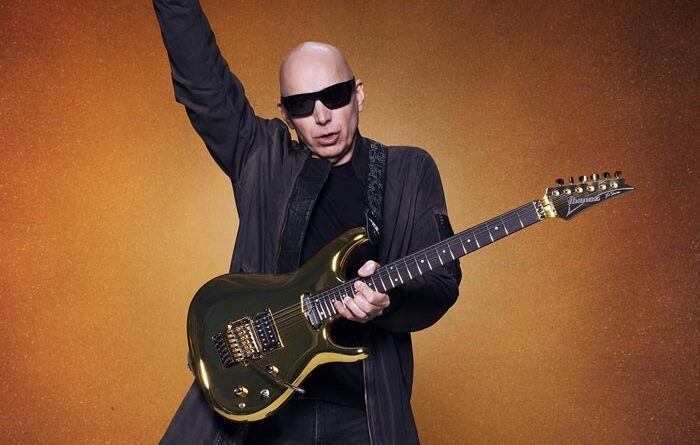
Header photo by Larry DiMarzio
Introduction / History
The signature bridge pickup lineage of DiMarzio and Joe Satriani is one of the more fascinating evolutionary trails in the aftermarket humbucker world. The DNA starts with the legendary DiMarzio PAF Pro, mutates into the quirky harmonic personality of the DiMarzio FRED, and then lands here with the DiMarzio Mo’ Joe. Don’t worry, there is more still to come!
The Mo’ Joe exists because Satriani needed more authority and push than the FRED could provide, especially as his rig evolved toward heavier string gauges and more dynamically responsive tube amps. But instead of simply piling on more output and compression, DiMarzio approached the design from a more refined angle. The pickup keeps the harmonic complexity and vocal upper mid behavior that made the FRED special while adding more punch, articulation, and string-to-string separation.
The Mo’ Joe is powered by an Alnico 5 magnet and sits in that sweet spot where it can comfortably handle melodic rock, hard rock, fusion, shred, and modern lead work without drifting into overly compressed metal territory. It has muscle, but it still breathes. That distinction matters.
A huge part of that personality comes from DiMarzio’s Dual Resonance design philosophy. Rather than both coils peaking at the exact same resonant frequency, the coils are intentionally tuned slightly apart. That tiny shift creates a broader harmonic spread and more dimensional top end without turning the pickup sterile or clinical. The result feels more alive under the fingers than many medium-hot bridge humbuckers.
Dual Resonance
Mo’ Joe uses DiMarzio Dual Resonance design, which changes the way the coils interact with each other.
Dual Resonance is basically mis-matched coils. It’s common for several pickup companies to allow about a 5% variance. But Dual Resonance is an intentional mis-matching of the coils to produce a specific “tuning” of the pickup’s voice. According to the patent, it is pretty much about putting a similar number of turns on each coil. But with different wire gauges.
In the image below, you will see that the left bobbin has a skinnier wind than the right bobbin. Yet both bobbins have a similar number of turns. It is the wire gauge that is different. with the left having a smaller gauge and the right having a larger.

courtesy of Guitar Pickup Database
Installation
For this evaluation, the DiMarzio Mo’ Joe lands in a stripped-down single-humbucker platform with a maple neck, maple fingerboard, basswood-style tonal response, and an original Floyd Rose double locking tremolo. Electronics remain intentionally straightforward with a 500k volume pot and quality output hardware to avoid masking the pickup’s natural voicing.
Physically, the Mo’ Joe feels very much like the modern DiMarzio standard: clean build quality, tight bobbin alignment, smooth legwork, and consistent winding. Installation is painless, especially if you are already familiar with DiMarzio color coding and four-conductor wiring setups. Direct mounting keeps the pickup mechanically connected to the body in a way that slightly enhances immediacy and attack response.
Height adjustment becomes surprisingly important with this pickup. The Mo’ Joe reacts noticeably to small setup changes. Too close to the strings and the low end can start getting a little thick during aggressive palm muting. Drop it slightly and the articulation opens up while preserving the muscular midrange character. There is a very workable sweet spot here.
One thing that becomes obvious quickly is how touch responsive this design is compared to many modern hotter bridge pickups. The Mo’ Joe does not rely on excessive compression to create sustain or perceived output. Pick attack, vibrato intensity, muting technique, and even left-hand cleanliness all influence the result in real time.
This is not a pickup that hides the player behind saturation. It behaves more like an extension of the guitar itself, which feels extremely on brand for Satriani’s style.
Evaluation
High Gain Performance
The DiMarzio Mo’ Joe immediately comes across as bigger and more authoritative than the FRED, but without losing articulation. The lows stay punchy, the mids remain broad and vocal, and the highs cut clearly without becoming harsh.
Big chords maintain impressive string separation under gain, which is where DiMarzio’s Dual Resonance design really shows itself. Harmonics spread naturally across the frequency range instead of collapsing into compressed mush. Palm-muted riffing has weight and attitude, though the low end still feels slightly more organic than ultra-tight ceramic metal pickups.
This thing clearly leans toward expressive hard rock and shred rather than sterile precision.
Lead Tone & Harmonics
The real personality of the Mo’ Joe appears once lead playing enters the picture. The pickup almost hides how expressive it is during rhythm work, then suddenly opens up with bends, vibrato, and legato phrasing.
Pinch harmonics jump off the strings effortlessly. Sustained notes develop vocal overtones that feel unmistakably Satriani-inspired without sounding one dimensional. There is enough dynamic range intact that your phrasing still matters, which is becoming increasingly rare in hotter bridge humbuckers.
The Mo’ Joe sings rather than screams.
Clean Tones & Dynamics
Clean settings are surprisingly versatile for a medium-output bridge humbucker. In series wiring, chords remain articulate while still sounding full and muscular. Parallel mode opens the top end further and introduces extra snap and picking sensitivity.
One thing stays consistent across every amp setting: the Mo’ Joe is revealing. Finger noise, muting technique, and sloppy synchronization are all exposed more easily than with heavily compressed pickups. The payoff is responsiveness. This pickup reacts to your hands constantly, which makes it feel more like part of the instrument than a separate piece of hardware.
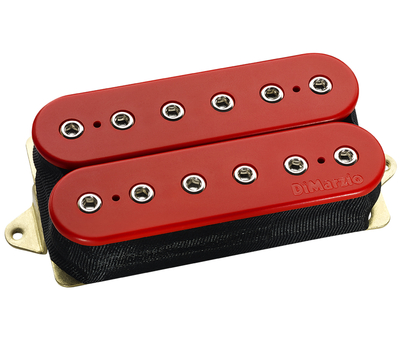
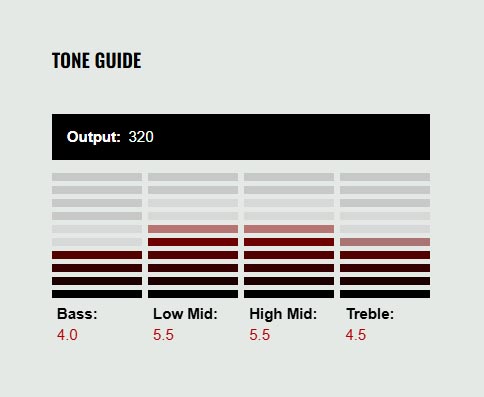
Specs
Series – 9.922 K
Inducatance – 4.879 H
Split – 5.059 K
Split – 4.879 K
Parallel – 2.483
Magnet – Alnico 5
Output – 320 mV
Demo
Conclusion
The DiMarzio Mo’ Joe occupies a very smart position in the DiMarzio lineup because it avoids the common trap of confusing output with musicality. It delivers more authority and girth than the FRED while preserving articulation, harmonic complexity, and touch sensitivity.
This is not a sterile shred pickup. It is not an ultra-modern metal pickup. And it is definitely not a vintage PAF clone pretending to be aggressive. The Mo’ Joe sits in its own lane where expressive lead work, articulate rhythm playing, and dynamic response coexist without compromise.
Players chasing melodic rock, instrumental rock, fusion, hard rock, classic shred, and versatile high-gain applications will probably connect with this pickup immediately. Especially players who live on their volume knob and want their right hand technique to actually matter.
What makes the Mo’ Joe impressive ten years later is how modern its design philosophy still feels. In a world overflowing with overwound compression machines, this pickup still prioritizes articulation, harmonic behavior, and player interaction first.
And honestly? That approach ages a whole lot better than trend chasing.
For reference, this DiMarzio Mo’ Joe bridge humbucker pickup evaluation was conducted with the following: Fractal Axe-Fx II XL+ featuring Celestion Impluse Responses and Fractal MFC-101 MIDI Foot Controller. ADA MP-1 Tube Pre-Amp loaded with Tube Amp Doctor ECC83 Premium Selected tubes, using the ADA MC-1 MIDI Controller. Fryette LX II Stereo Tube Power Amplifier. Physical cabs use are Marshall 1960B, Mojotone British, and Peavey 6505 cabs loaded with Celestion Classic Series Vintage 30s and Classic Series G12M Greenbacks.
DiMarzio Website | Facebook | Twitter | YouTube | Instagram
7 string 59 Airbucker Alnico 2 Alnico 3 Alnico 4 Alnico 5 Alnico 8 Bare Knuckle BKP Boot Camp Brown Sound Celestion Ceramic Charvel Custom Shop David Shepherd DiMarzio Dual Resonance Edge EVH Fishman Floyd Rose Fluence Gibson HSP90 Humbucker Ibanez JB Jimmy Page John Petrucci MJ Mojotone P90 PAF Pariah Pickup Seymour Duncan Singlecoil Single Width Speaker Steve Vai Tech Tip Tremolo Virtual Vintage