DiMarzio FRED
Header photo by Larry DiMarzio
Introduction / History
Before the DiMarzio FRED exists, the DiMarzio PAF Pro sets the stage. That pickup already pushes beyond vintage expectations and leans into clarity, articulation, and focus. It gives Joe Satriani a voice that cuts, but it still plays within the rules of a traditional humbucker. Satch is not interested in rules.
While shaping the rise of instrumental guitar in the 1980s and guiding players like Steve Vai and Kirk Hammett, he chases something more expressive. The goal is not just clarity. The goal is character. He wants a pickup that reacts, that pushes harmonics forward, that turns technique into something almost vocal.
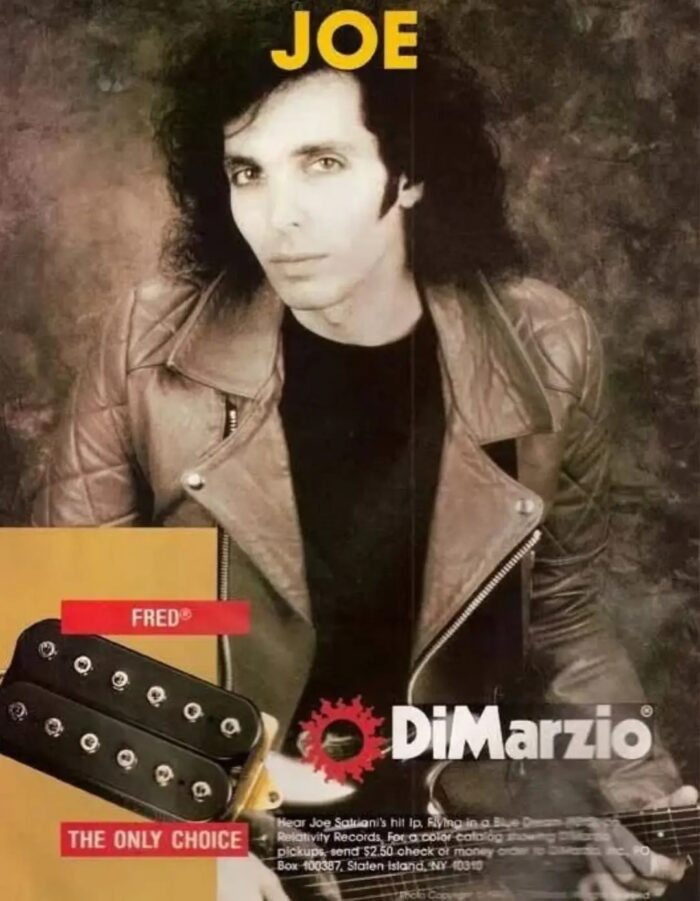
In 1989, that idea becomes the DiMarzio FRED, his first signature model. It grows directly out of the PAF Pro, but it does not stay there. The midrange shifts, the response changes, and the harmonic content becomes the entire point. This is not a refinement, but a mutation.
Dual Resonance
FRED uses DiMarzio Dual Resonance design, which changes the way the coils interact with each other.
Dual Resonance is basically mis-matched coils. It’s common for several pickup companies to allow about a 5% variance. But Dual Resonance is an intentional mis-matching of the coils to produce a specific “tuning” of the pickup’s voice. According to the patent, it is pretty much about putting a similar number of turns on each coil. But with different wire gauges.
In the image below, you will see that the left bobbin has a skinnier wind than the right bobbin. Yet both bobbins have a similar number of turns. It is the wire gauge that is different. with the left having a smaller gauge and the right having a larger.

courtesy of Guitar Pickup Database
Installation
For this evaluation, the DiMarzio FRED is installed into my usual neutral test platform: a double cut 25-1/2″ scale superstrat built specifically for pickup evaluations. The guitar features an alder body, maple neck, and rosewood fingerboard paired with a German made Floyd Rose Original tremolo system. Strings are 09-42 with an E standard tuning. This combination tends to be very honest. If a pickup has personality, this guitar reveals it immediately.
Electronics follow my standard evaluation recipe. The control cavity contains Bourns 500k pots, a Switchcraft 3-way toggle, and a straightforward volume-only layout. Wiring is classic two humbucker configuration so the pickup can be evaluated both in the bridge and the neck position without additional switching variables. I have the DiMarzio PAF Joe in the neck position, and we will be discussing that one soon.
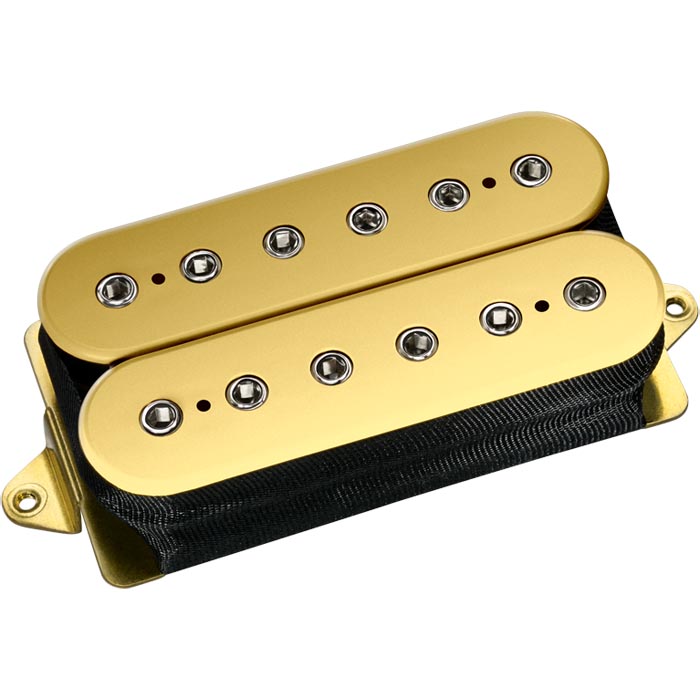
Evaluation
The first thing that stands out is that FRED does not try to sound big in the traditional sense. It does not lean on sheer output or low end weight to make an impression. Instead, it sharpens everything.
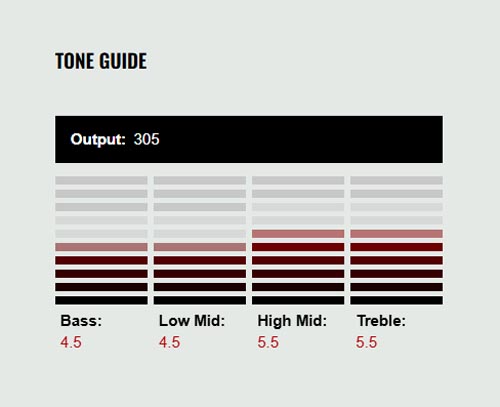
The low end stays tight and controlled, never spilling over into mud. The midrange carries a distinct push that gives single notes authority without making chords feel congested. The high end has an almost single coil like edge, which adds clarity but never crosses into sterile territory when the pickup is dialed in correctly.
Where this pickup separates itself is in the harmonic response. Pinch harmonics jump out with almost no effort, and natural harmonics bloom in a way that feels exaggerated in the best possible sense. Sustained notes take on a vocal quality that reacts to vibrato and touch, giving the impression that the guitar is speaking rather than simply producing sound.
Dynamics play a huge role here. Light picking produces a clean and articulate response, while digging in brings out aggression and bite. The volume knob becomes a real tool instead of a simple output control, allowing a wide range of usable tones without losing clarity.
For lead playing, FRED feels purpose built. It highlights phrasing, rewards control, and exposes every detail. For rhythm work, it stays tight and defined, though it does not deliver the thick wall of saturation that some modern players expect. It favors separation and precision over density.
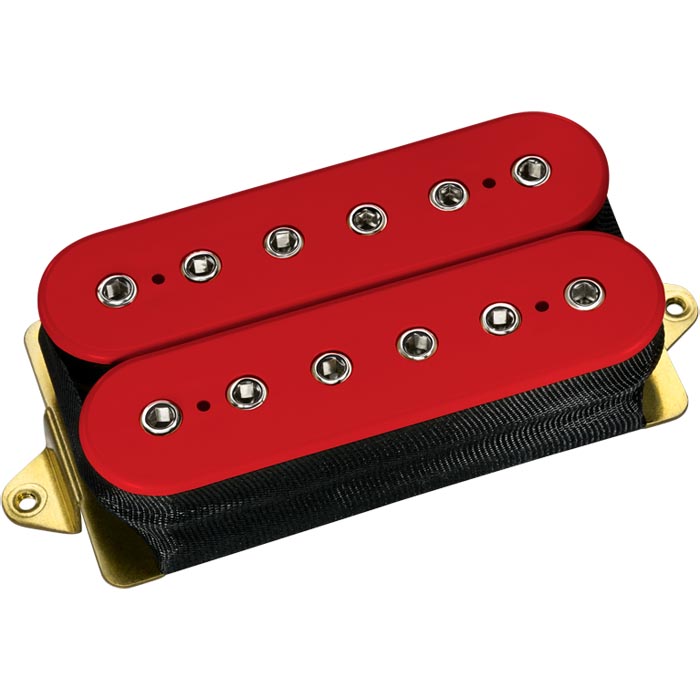
Specs
Series – 9.816 k
Inductance – 4.116 H
Split Screw – 5.736 k
Split Slug – 4.095 k
Parallel – 2.389 k
Output – 305 mV
Magnet – Alnico 5
Demo
Conclusion
The DiMarzio FRED does not try to fit into a familiar category. It does not chase vintage warmth or modern saturation. It focuses on expression. FRED does not hide the player. It reveals them.
Built from the foundation of the PAF Pro and shaped by Joe Satriani, this pickup transforms technique into tone in a very direct way. Every movement of the hands comes through, which makes it both inspiring and unforgiving. For players who want compression and smoothness, this can feel exposed. Players who want their phrasing, attack, and harmonic control to take center stage, this becomes something special.
For reference, this DiMarzio FRED DP153 humbucker pickup evaluation was conducted with the following: Fractal Axe-Fx II XL+ featuring Celestion Impluse Responses and Fractal MFC-101 MIDI Foot Controller. ADA MP-1 Tube Pre-Amp loaded with Tube Amp Doctor ECC83 Premium Selected tubes, using the ADA MC-1 MIDI Controller. Fryette LX II Stereo Tube Power Amplifier. Physical cabs use are Marshall 1960B, Mojotone British, and Peavey 6505 cabs loaded with Celestion Classic Series Vintage 30s and Classic Series G12M Greenbacks.
DiMarzio Website | Facebook | Twitter | YouTube | Instagram
7 string 59 Airbucker Alnico 2 Alnico 4 Alnico 5 Alnico 8 Artist Signature Bare Knuckle BKP Brown Sound Celestion Ceramic Charvel Custom Shop David Shepherd DiMarzio Dual Resonance Edge EVH Fishman Floyd Rose Gibson HSP90 Humbucker Ibanez JB Jimmy Page John Petrucci MJ Mojotone P90 PAF Pariah Pickup Rail Satch Seymour Duncan Singlecoil Single Width Speaker Steve Vai Tech Tip Tremolo Virtual Vintage